
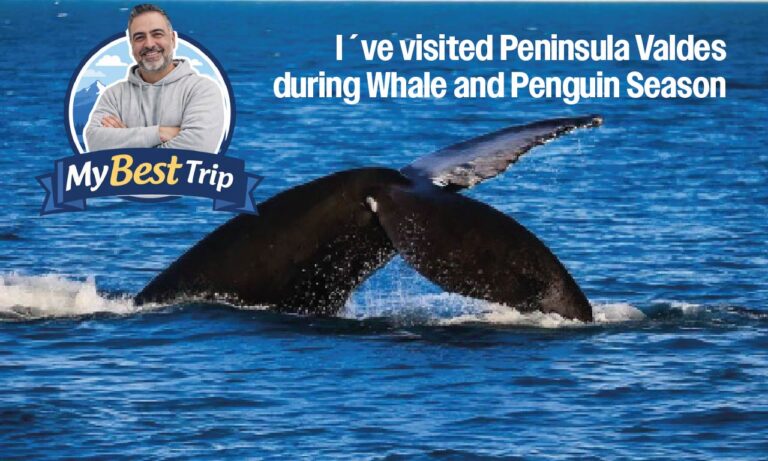
I think, if you´re a nature lover, it´s your trip. Peninsula Valdes, a paradise to see whales and penguins. October is, in my opinion, one of the most fascinating times to visit Península Valdés. Patagonia slowly awakens after the winter months. The days grow longer, the skies are usually clear and luminous, and the air has that dry freshness so characteristic of southern Argentina. It is also the time when one of the most exciting natural spectacles in the country takes place: southern right whales swim peacefully in the protected gulfs of the peninsula while thousands of Magellanic penguins begin to occupy their colonies along the Atlantic coast.
This is the itinerary I recommend to those who follow my journeys and want to discover, day by day, everything that can be experienced in this extraordinary region of Patagonia. If you are a nature lover, do not hesitate to include Puerto Madryn and Península Valdés in your next trip.
Puerto Madryn & Peninsula Valdes – 3 night traditional program
Check best season to see whales and penguins in the area
DAY 1: Arrival in Puerto Madryn. First encounter with Whales in El Doradillo
The day began early. I always like to wake up earlier than necessary when starting a journey like this, perhaps because the anticipation of what lies ahead makes it impossible to stay asleep. That morning the airport in Buenos Aires was still quiet, even though October is already high season for international tourism. The sky had barely begun to brighten when my flight departed south toward the magnificent landscapes of Patagonia.
The flight to Trelew takes a little more than two hours, but during the descent you begin to notice that the scenery has completely changed. The green Argentine Pampas give way to the Patagonian steppe. Vegetation becomes low and sparse, almost minimalistic. The steppe stretches endlessly in every direction, with ochre and golden tones contrasting against an enormous sky.
The Patagonian steppe surrounding Península Valdés is a vast and silent landscape dominated by low shrubs, hardy grasses, and soils shaped by constant winds. At first glance it may seem austere, almost desert-like, yet it supports remarkable wildlife. Guanacos, maras, foxes and many bird species thrive here, perfectly adapted to the dry and windy climate. Beneath the immense Patagonian sky, the steppe conveys a deep feeling of space, freedom and untouched nature.
The plane landed smoothly in the city of Trelew, one of the most important urban centers in the province of Chubut and home to the region’s main airport. From there the transfer to Puerto Madryn takes about one hour. As you approach the sea, the landscape opens up even more and the horizon seems endless. Finally, Golfo Nuevo appears—deep blue and protected by the natural curves of the peninsula and the city of Puerto Madryn, the gateway to the extraordinary landscapes of Península Valdés.
I stayed near the coast, facing the ocean. The Dazzler by Wyndham Puerto Madryn is an excellent option. After check-in, I always recommend taking a walk along the seaside promenade. Puerto Madryn has a calm and luminous energy. The waterfront path is wide and pleasant, and the constant sound of the waves creates a relaxing atmosphere after a day of travel.
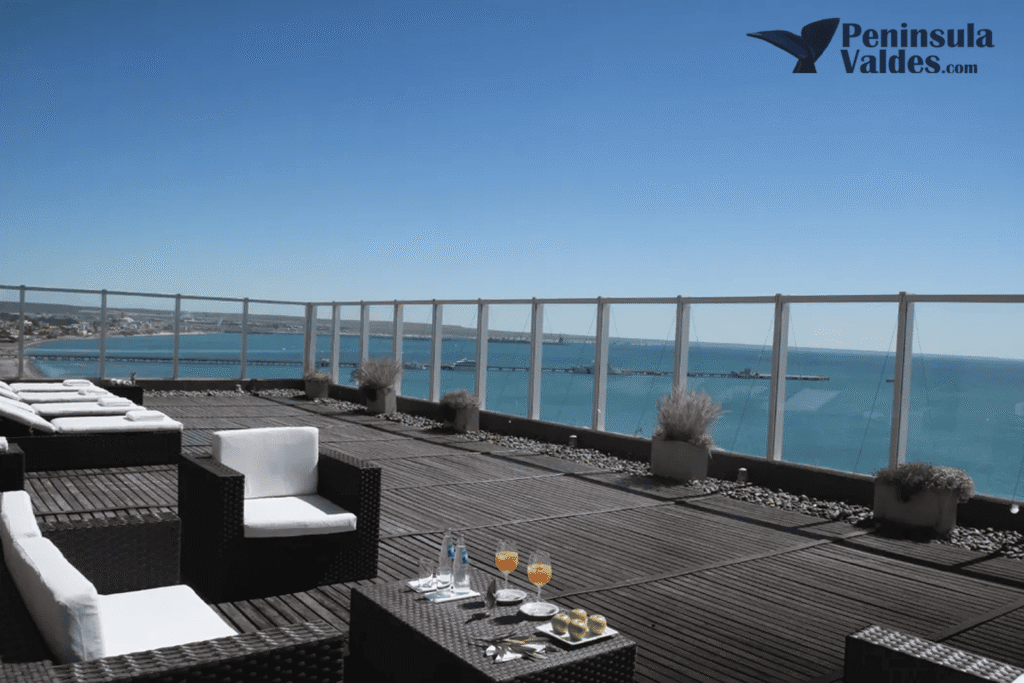
In October the weather is usually cool but comfortable. The Patagonian wind appears from time to time, though it often calms down by sunset. That day the sky was completely clear and the sea incredibly calm.
I sat quietly facing the gulf, simply watching the water. At this time of year patience often rewards you with a first whale sighting right from the shore. Suddenly, in the distance, I saw a plume of vapor rising from the surface—the unmistakable blow of a whale breathing. It lasted only a moment, but it was enough to remind me why this region is considered one of the best places in the world to observe whales.
If your flight arrives early and you are visiting between July and October, I strongly recommend visiting El Doradillo Beach, where whales can sometimes be seen just meters from the shore. That is exactly what I did. I arranged a private transfer and my guide and driver, Gustavo, was waiting to take me there.

The amazing experience at Doradillo Beach
The experience at El Doradillo is one of the most natural and surprising ways to observe southern right whales. Unlike the boat excursions departing from Puerto Pirámides, here the encounter happens directly from the beach. During the months of June through October many whales approach extremely close to the coastline, especially mothers with their calves who use the calm, shallow waters of Golfo Nuevo to rest and nurse.
Puerto Madryn & Peninsula Valdes – 3 night traditional program
Check best season to see whales and penguins in the area
El Doradillo is only a short drive from Puerto Madryn, crossing a stretch of Patagonian steppe before suddenly revealing the open sea. The beach is wide, wild and untouched, reinforcing the feeling of being somewhere truly remote.
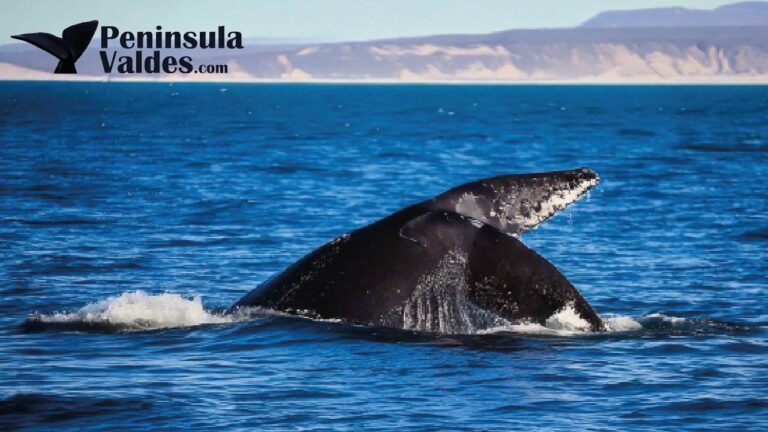
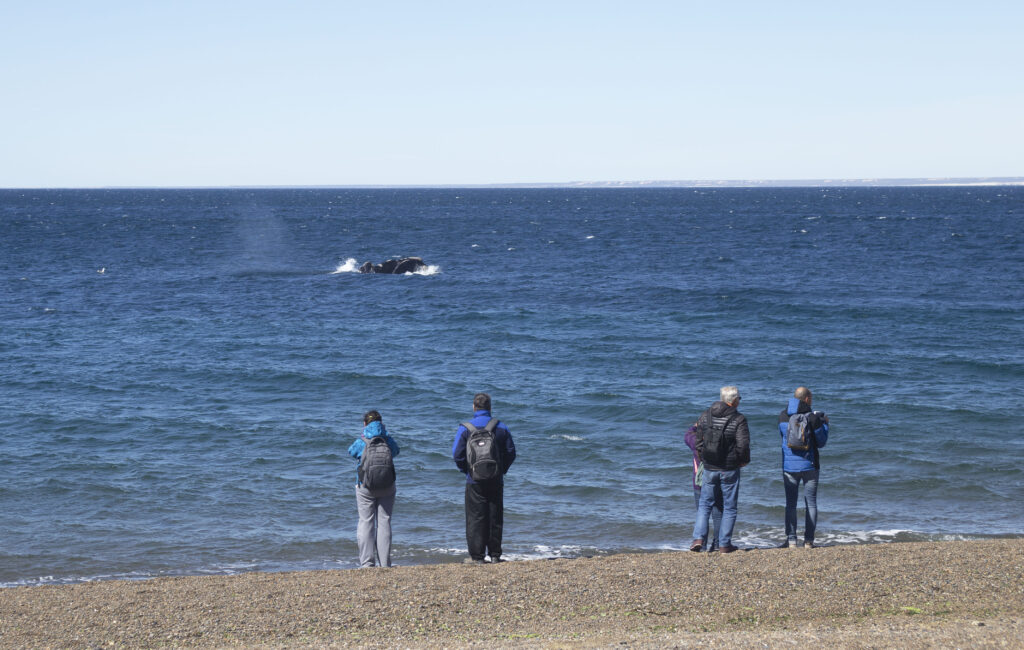
The most exciting moment occurs when you stand quietly by the shore. Suddenly a whale’s blow appears, followed by the dark silhouette of its massive body emerging slowly just offshore. Sometimes they lift their tail before diving, other times they swim parallel to the beach. The sea was calm that afternoon and I was able to see them just a few meters away—a mother and her calf moving slowly through the water.
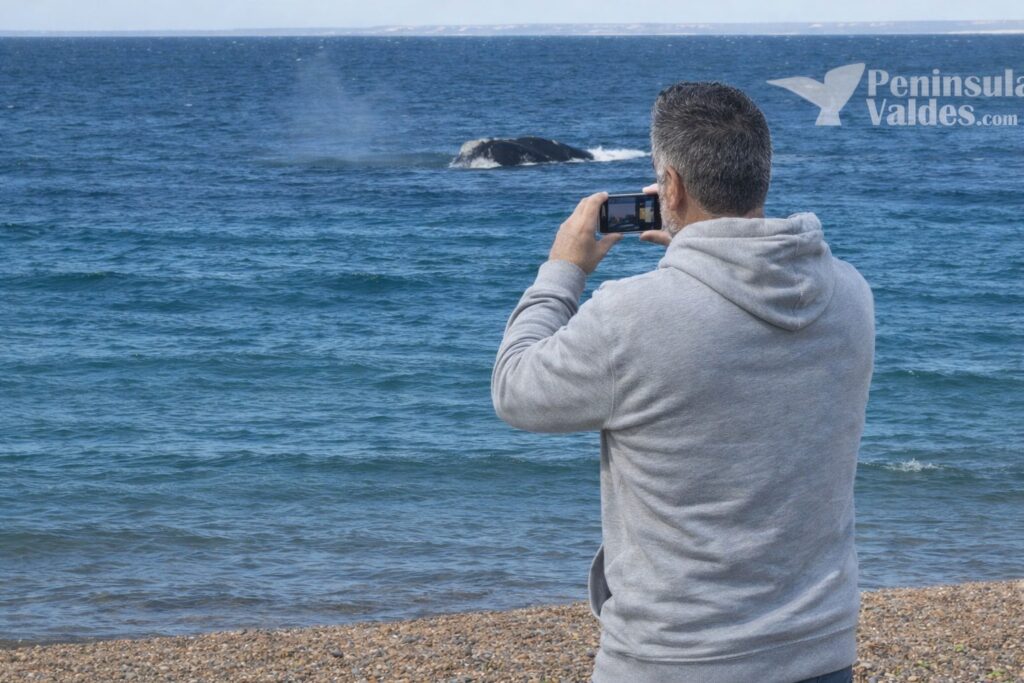
What makes El Doradillo extraordinary is the absence of boats and noise. There is only the sound of the sea and the Patagonian wind. This allows visitors to observe whales behaving naturally in an environment that feels almost untouched by time.
I stayed there for almost two hours, unable to leave. Gustavo prepared some snacks and we simply watched the whales moving back and forth. I took countless photos and still felt it was not enough.
Back in Puerto Madryn, the evening invites visitors to enjoy the local gastronomy. Restaurants along the coast offer fresh seafood, Patagonian shrimp and excellent regional wines. After dinner, walking again along the waterfront under a sky full of stars is the perfect way to end the first day.
Puerto Madryn & Peninsula Valdes – 3 night traditional program
Check best season to see whales and penguins in the area
DAY 2: Península Valdés and the amazing whale watching
The second day begins early. My itinerary is designed so that I do not return to Puerto Madryn immediately after visiting the peninsula. Instead, I spend one night in Puerto Pirámides to fully enjoy the experience. Distances here are long, so staying inside the peninsula is a very good idea. The morning light in Patagonia is special—soft, golden, and incredibly clear.
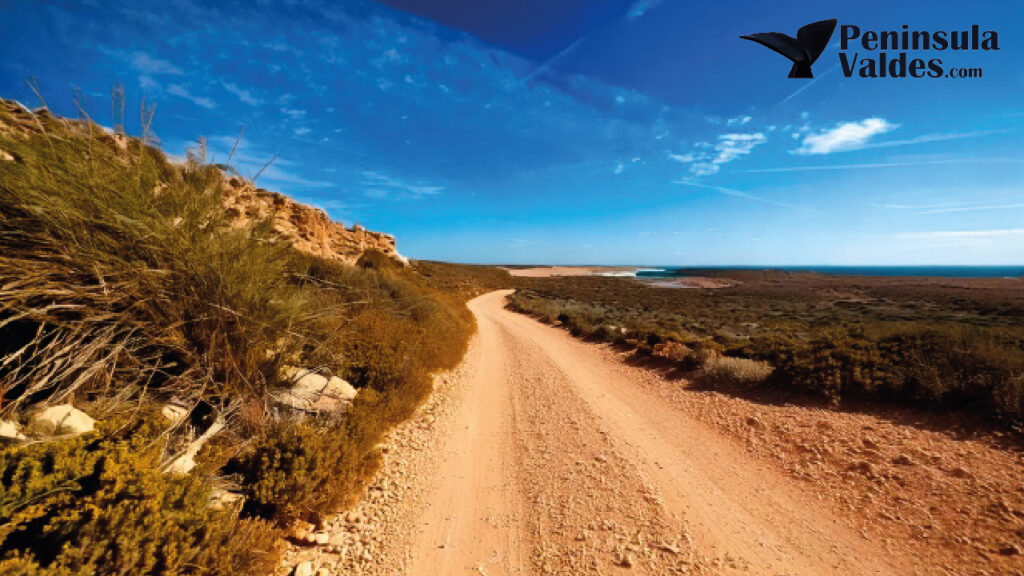
After breakfast we headed toward Península Valdés. The road crosses vast stretches of open steppe where guanacos are frequently seen walking near the road. Sometimes Patagonian maras appear as well, running swiftly across the landscape.
Istmo Ameghino: first stop
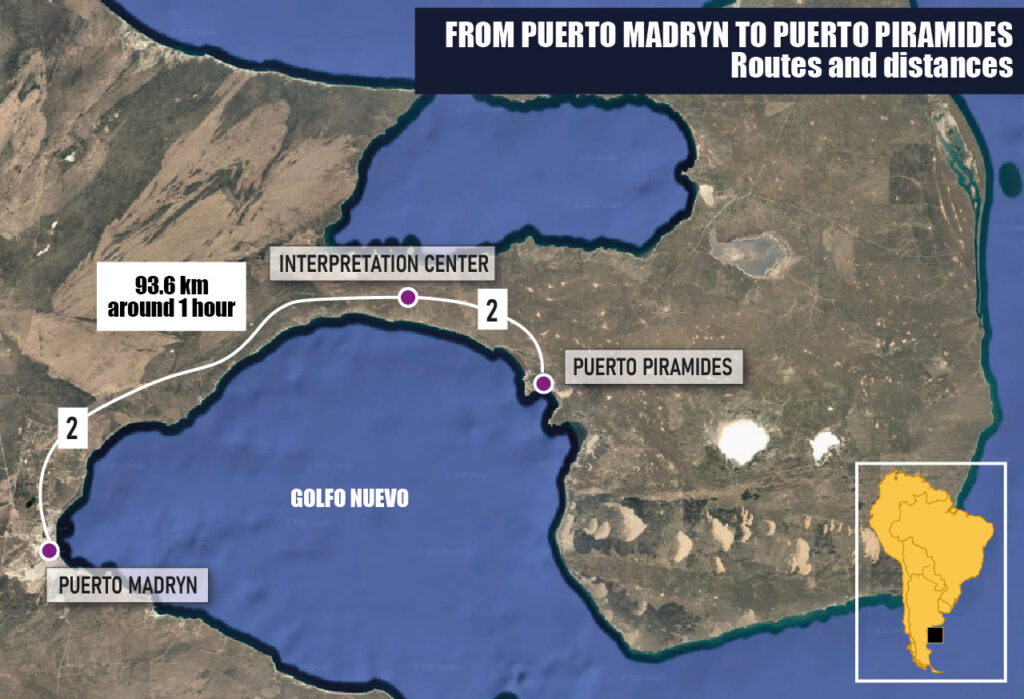
One of the first recommended stops is Istmo Ameghino, the narrow strip of land connecting the peninsula to the mainland. From the viewpoint you can see both Golfo Nuevo and Golfo San José at the same time. It is a spectacular geographic feature and offers a stunning panoramic view of the surrounding landscape.
The visitor center located there is also very interesting. It explains the geology, wildlife and natural history of Península Valdés. The peninsula is one of the most unique geographic formations on the Atlantic coast of South America, shaped over millions of years by marine sedimentation, tectonic uplift and erosion.
After leaving Istmo Ameghino we continued to Puerto Pirámides, the small coastal village where whale-watching excursions depart.
We arrive to Puerto Piramides
The town is simple yet charming. Sandy streets, small houses and the sea always in view. Puerto Pirámides is the only permanent settlement within Península Valdés and its population numbers only a few hundred residents, though during whale season the town becomes lively with visitors from all over the world. And here comes the highlight of the day: whale watching.
As the boat leaves the shore and begins to move slowly across the blue waters of the gulf, anticipation builds. Suddenly the captain slows down and asks everyone to remain quiet. Then it happens. A blow appears in the distance. Moments later a massive dark body surfaces. A southern right whale. Seeing these enormous animals so close is an unforgettable experience. They can reach 16 meters in length and weigh up to 40 tons, yet they move through the water with remarkable grace.
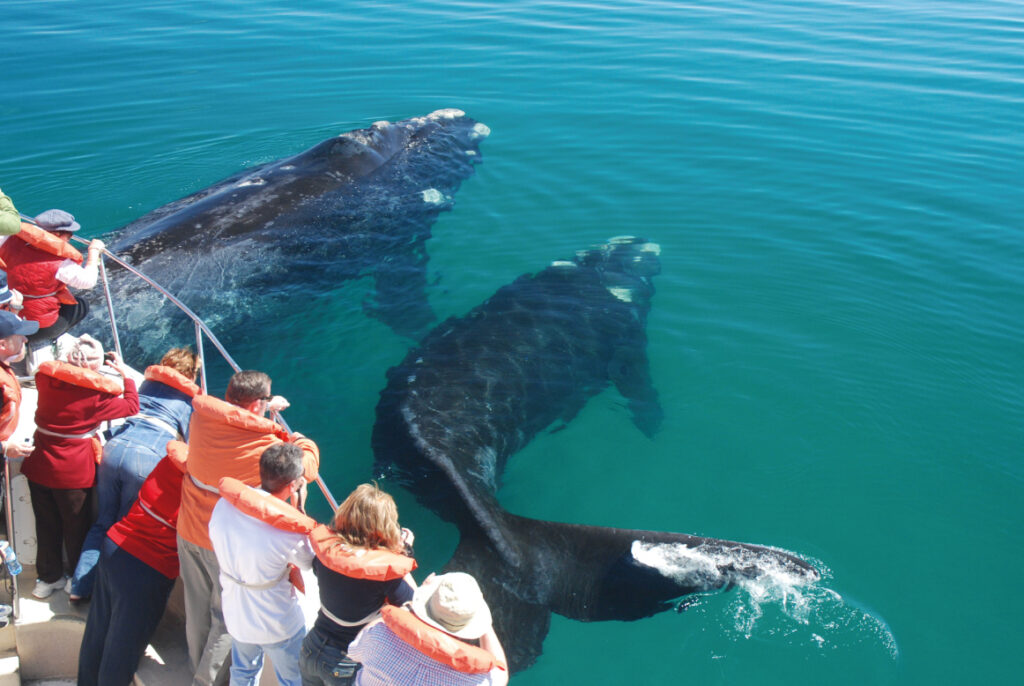
One of the most distinctive features of these whales are the white callosities on their heads, which are unique patterns that scientists use to identify each individual—almost like fingerprints. What fascinates me the most is their behavior. They are curious and often approach boats slowly, sometimes passing underneath them or swimming gently around them. During spring, it is very common to see mothers swimming with their calves. The mothers teach them how to breathe, dive, and move through the calm waters of the gulfs. Sometimes they lift their tails high before diving. Other times they slap the water with their fins or even perform spectacular breaches. But even when they simply glide slowly through the water, the experience is deeply moving.
Standing there, watching a creature of such size and elegance moving peacefully through the ocean, you realize how extraordinary nature can be. For me, witnessing southern right whales in Península Valdés is not just a wildlife experience. It is a moment of connection with the wild world—one that I recommend to every traveler who loves nature.
Often mothers swim alongside their calves, teaching them how to breathe and navigate the calm waters of the gulf. Sometimes they raise their tails before diving. Occasionally they leap partially out of the water or slap the surface with their fins. Being so close to such a majestic animal is deeply moving.
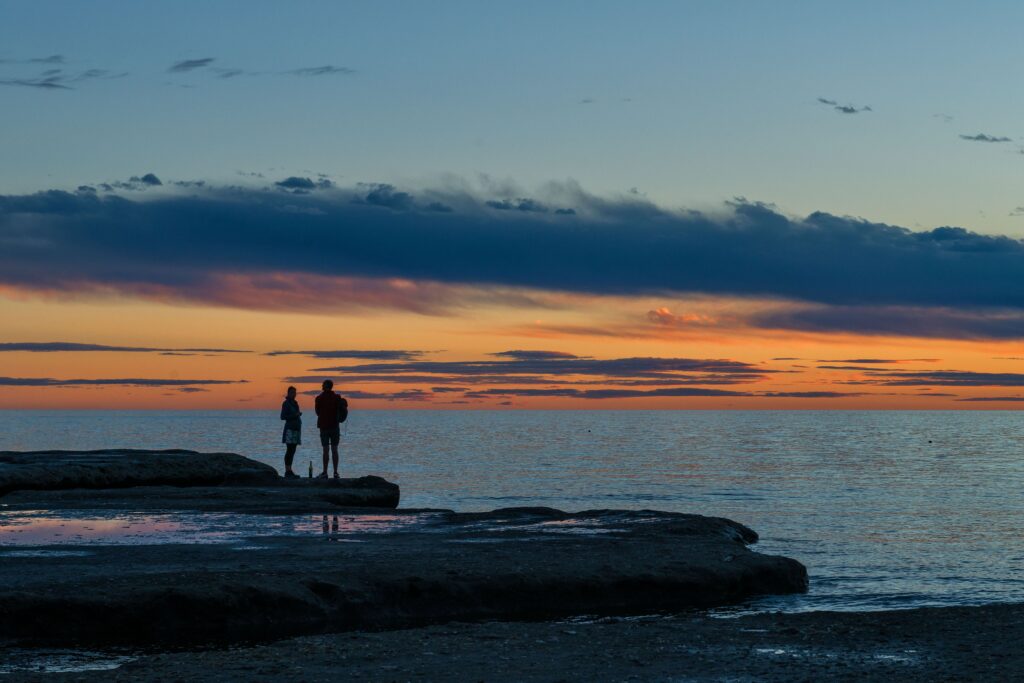
That evening I stayed in Puerto Pirámides. Watching the sunset over the calm waters of the gulf while whales occasionally surfaced in the distance was simply unforgettable.
DAY 3: More about Peninsula Valdes and Penguins in Estancia San Lorenzo
Morning in Puerto Pirámides has a unique rhythm. I woke early and stepped outside with a cup of coffee. The sea was perfectly calm and the rising sun illuminated the cliffs surrounding the bay. From the terrace I saw another whale surface in the distance. One of the great privileges of staying in Puerto Pirámides is being able to observe whales directly from the shore. Later we continued exploring the peninsula and headed north to Estancia San Lorenzo, one of the most fascinating wildlife areas in the region. The estancia is located about 160 kilometers from Puerto Madryn and hosts one of the largest continental colonies of Magellanic penguins in Patagonia. Every year between September and April more than 600,000 penguins arrive here to reproduce.
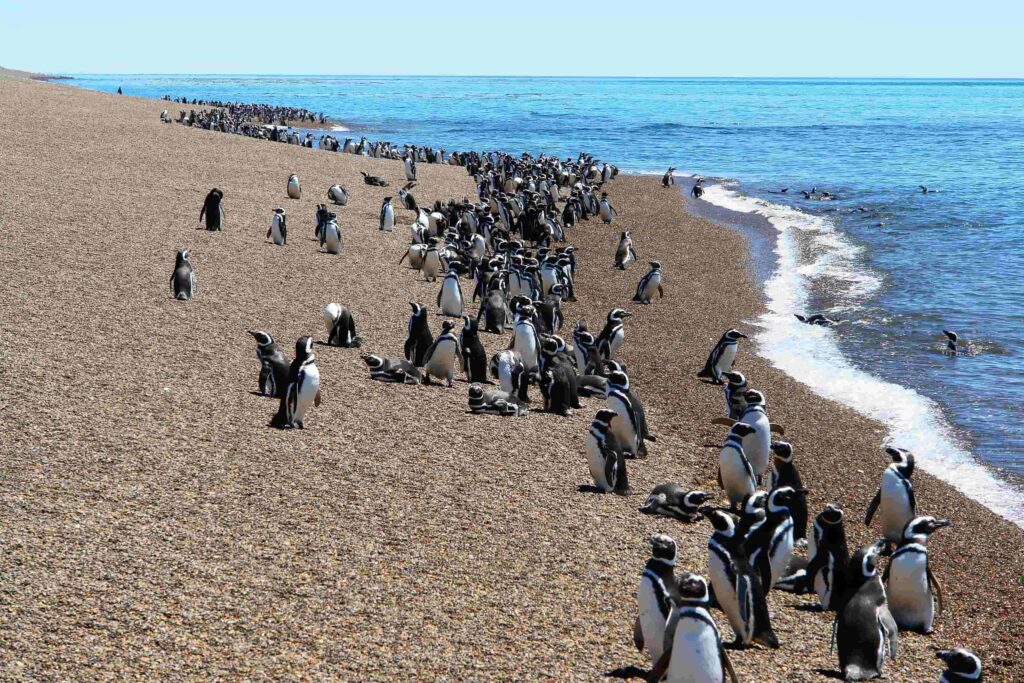
Walking along the marked trails, visitors can observe penguins returning from the sea, resting near their nests, or waddling through the steppe vegetation. Magellanic penguins spend much of the year at sea but return each spring to the same coastal areas where they were born. They dig burrows or nest beneath bushes to protect their eggs from sun and wind. It is an extraordinary experience to witness this natural cycle up close.
By late afternoon we returned to Puerto Madryn, crossing once again the vast Patagonian landscapes. That night I enjoyed a traditional Patagonian lamb dinner, one of the culinary highlights of southern Argentina.

DAY 4: Farewell to Northern Patagonia
The final day always feels different. There is a mixture of calm and nostalgia when a journey comes to an end. I woke early and walked one last time along the beach. The sea was perfectly calm and the rising sun reflected golden light across Golfo Nuevo. In the distance, a whale surfaced once again. A perfect farewell.
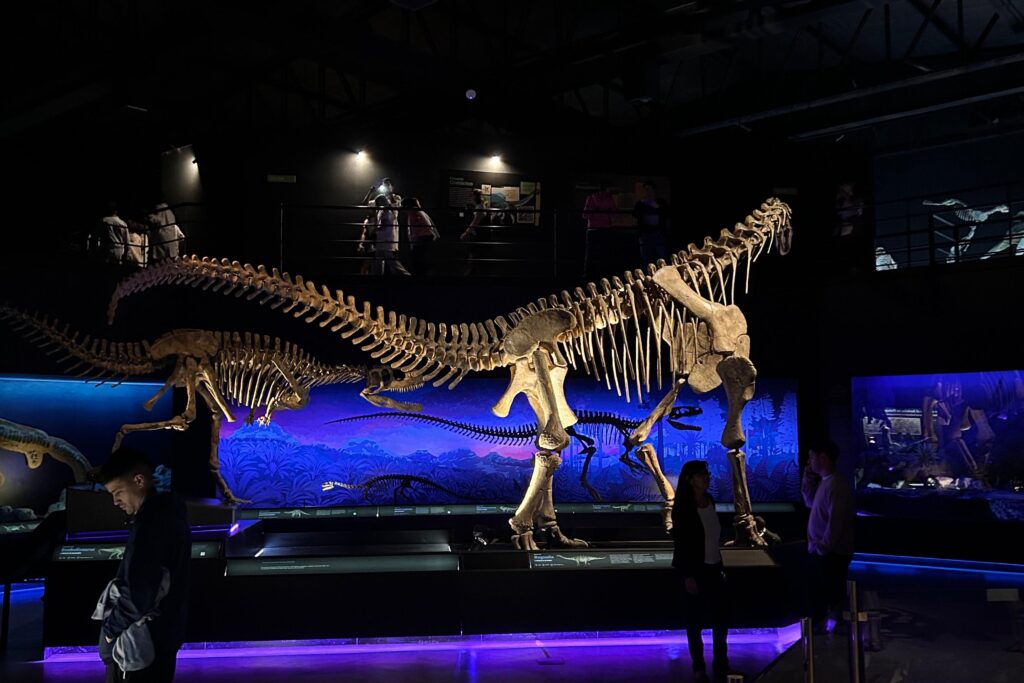
If you have extra time, there are other interesting visits nearby, such as the Egidio Feruglio Paleontological Museum in Trelew, one of the most important dinosaur museums in South America. You can also visit Gaiman and Dolavon, charming Welsh heritage towns where visitors can experience traditional Welsh tea culture brought to Patagonia by settlers more than 150 years ago.
But it was time to leave. Before heading to the airport, I sat quietly facing the sea with a cup of coffee, simply enjoying the landscape. Patagonia has a way of reminding us how immense nature truly is. As the plane lifted into the clear sky, I thought about how few places in the world combine wildlife, open landscapes and a sense of freedom quite like this region.
And every time I leave Patagonia, I always think the same thing. I will return.
Puerto Madryn & Peninsula Valdes – 3 night traditional program
Check best season to see whales and penguins in the area
Interested in my trip and personal assistance? Email me: info@ripioturismo.com I´m ready to help you!


