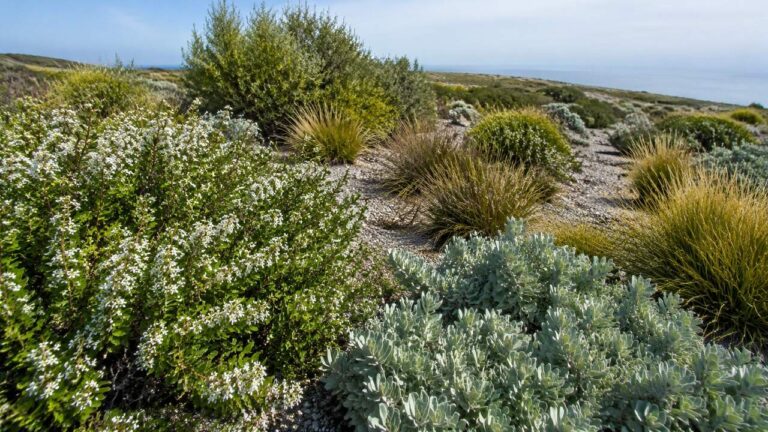
The steppe around Península Valdés may look sparse from a moving vehicle, but its low shrubs, cushion plants and grasses are finely adapted to wind, drought, salt and grazing. Vegetation holds soil, feeds insects and herbivores, and creates shelter at ground level. Learning a few growth forms is more useful than trying to identify every species from a photograph.
Why the vegetation stays low
Rainfall is limited and variable, winds increase water loss, and exposed soils offer little protection. Many native plants reduce leaf area, grow close to the ground, carry spines or resins, or develop deep and extensive roots. Slow growth means that vehicle or foot damage can remain visible for years.
Characteristic plants and growth forms
| Example | Adaptation | Field clue |
|---|---|---|
| Quilembay (Chuquiraga avellanedae) | Tough, small leaves and rigid form | Yellow-orange flowers in season |
| Molle (Schinus spp.) | Woody, drought-tolerant shrub | Resinous aromatic foliage |
| Zampa (Atriplex lampa) | Salt and drought tolerance | Gray-green appearance |
| Coirón grasses | Dense tussocks protect growing points | Golden clumps moving in wind |
Plants support the wildlife travelers notice
Guanacos browse shrubs and grasses; maras use open vegetation mosaics; insects depend on flowers and foliage; ground birds need cover. Shrub patches also slow wind and collect organic matter. The steppe is therefore a network, not a collection of isolated plants.
Puerto Madryn – 4 night traditional program
Check best season to see whales and penguins in the area
Flowering is seasonal and rainfall-dependent
Spring generally brings more visible flowering, but timing varies with temperature and rain. A dry year may produce a subdued display. Avoid claims of a guaranteed “super bloom.” Small flowers are often best observed beside established trails or viewpoints rather than by walking into vegetation.
Native, endemic and introduced are different ideas
A native species occurs naturally in the region; an endemic species has a restricted natural distribution; an introduced species arrived through human activity. Not every visually dominant roadside plant is native, and not every native plant is unique to Península Valdés. Reliable identification may require flowers, fruit or expert examination.
I recommend that travelers photograph the whole plant, its leaves and its immediate habitat rather than picking a sample. Those three images are far more useful for later identification—and leave the plant where it belongs.
Protecting steppe vegetation
- Stay on roads, trails and durable surfaces.
- Never collect flowers, seeds or wood in protected areas.
- Clean footwear to reduce seed transport.
- Do not park on shrubs or grass tussocks.
- Keep fire strictly within authorized rules.
Once visitors begin noticing plant form and spacing, the apparently empty steppe becomes a readable landscape shaped by survival, competition and cooperation.
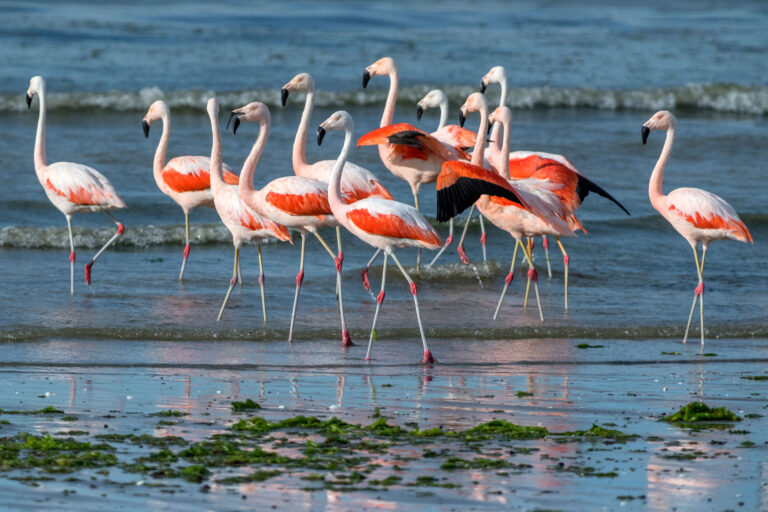
Birdwatching Whole Day Tour
Embark on a full-day birdwatching adventure in Patagonia, discovering the diverse avian species of the Peninsula Valdés region.
- Puerto Madryn
From Price: USD 1290
Classic Peninsula Valdes
Discover the natural wonders of Peninsula Valdés on this full-day adventure.
- Peninsula Valdes
From Price: USD 130