Golfo Nuevo holds more than whale-watching scenery. Below its sheltered surface lies a collection of working vessels, accidental wrecks and deliberately created artificial reefs that reveal how Puerto Madryn grew around shipping, fishing and diving. Some remains can be appreciated from shore; others are accessible only to trained divers with local operators. This guide explains the history without turning every sunken hull into the same story.
Why Golfo Nuevo has so many wreck sites
Puerto Madryn developed as a maritime gateway for the Central Chubut Railway, regional commerce and, later, industrial fishing. Ships entered a gulf protected from the open Atlantic but still exposed to wind, mechanical failure, grounding and human error. During the twentieth and twenty-first centuries, selected retired vessels were also prepared and sunk under controlled conditions to create dive parks and marine habitat.
That distinction matters: a historical shipwreck is evidence of an event, while an artificial reef is a planned second life for a vessel. Both form part of local maritime culture, but their origin and conservation issues differ.
Folías: the most visible wreck near Puerto Madryn
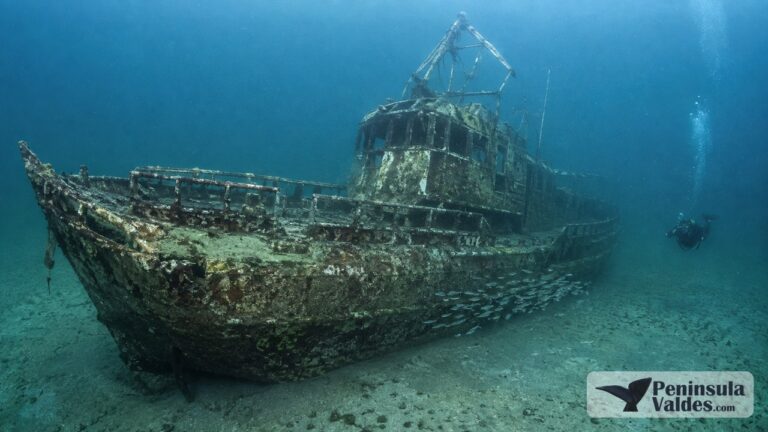
The Folías is the wreck most travelers encounter. The former cargo vessel lies off Playa Paraná, south of the city, with part of its structure visible from the coast. Its relatively shallow setting made it one of the area’s best-known introductory wreck dives, although conditions, certification requirements and access must always be confirmed with a licensed operator.
For shore access, swimming and snorkeling considerations, use a dedicated Playa Paraná visitor guide once it is published. This article focuses instead on the wider maritime story.
Colomba and the memory of the old waterfront
The metal sailing vessel Colomba sank in 1935 near Puerto Madryn’s waterfront. Its surviving remains connect the modern promenade with an earlier period of coastal navigation, when the bay, piers and railway infrastructure were central to everyday life. Wrecks such as Colomba are not simply photographic objects: they are archaeological sites whose value comes from location, construction and documented history.
The deeper wreck parks
Local dive itineraries may include the Antonio Miralles, Albatros, Urabain and Hu Shun Yu 809. Their depths and conditions vary considerably. Some sit around the range normally reserved for experienced or advanced recreational divers, while the deepest portions may require additional training. Marine growth, fish, octopuses and invertebrates gradually transform steel surfaces into habitat.
Puerto Madryn’s existing diving guide summarizes the city’s principal underwater environments. Never select a wreck only from a published depth: visibility, temperature, surge, currents, entry method and the diver’s recent experience all affect suitability.
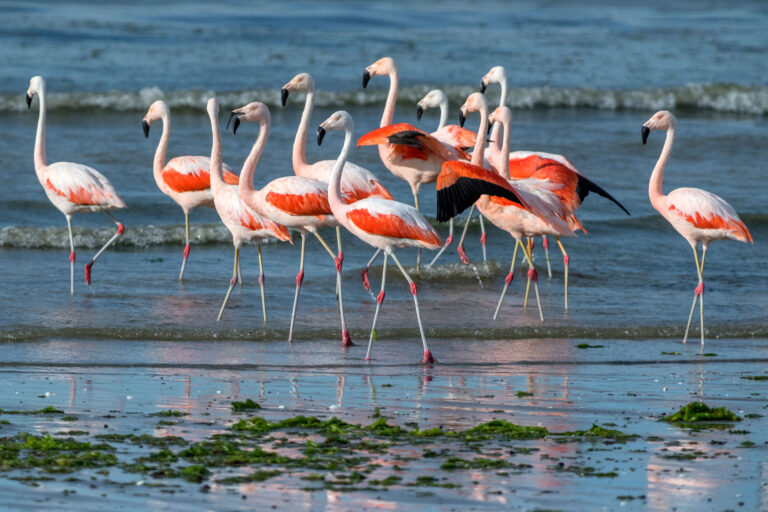
Birdwatching Whole Day Tour
Embark on a full-day birdwatching adventure in Patagonia, discovering the diverse avian species of the Peninsula Valdés region.
- Puerto Madryn
From Price: USD 1290
Can non-divers experience this history?
Yes. The Folías can be viewed from the Playa Paraná area, the waterfront provides context for the port’s development, and local museums interpret the relationship between people and the sea. Boat trips and snorkeling should never approach a wreck without authorized guidance. Rusted metal, fishing line, unstable structures and changing tides can make apparently calm sites hazardous.
Responsible wreck diving
- Book a licensed local operator and disclose your certification and most recent dive honestly.
- Do not enter enclosed sections unless the plan, training and equipment specifically allow penetration.
- Maintain buoyancy to avoid damaging marine growth or disturbing sediment.
- Never remove metal, pottery, fittings or “souvenirs.”
- Use a suitable exposure suit: Golfo Nuevo is not tropical water.
In more than 25 years of organizing travel in Argentina, I have learned that the best activity is not necessarily the most advanced one. A conservative site matched to the traveler’s real experience usually produces a safer and more rewarding day.
Puerto Madryn – 4 night traditional program
Check best season to see whales and penguins in the area
How to place the wrecks in Puerto Madryn’s history
Visit the waterfront and Punta Cuevas before or after a dive, then compare the visible port landscape with the submerged one. The ships below Golfo Nuevo record different moments: coastal trade, fishing expansion, maritime accidents and the rise of Puerto Madryn as Argentina’s best-known diving destination. Treated respectfully, they are both habitat and historical evidence.
If wreck diving is part of your trip, ask a local operator to propose sites after reviewing certification, weather and recent conditions. The goal is not to collect wreck names, but to understand the gulf safely from the surface to the seabed.
Puerto Madryn & Peninsula Valdes – 3 night traditional program
Check best season to see whales and penguins in the area
Puerto Madryn & Estancia San Lorenzo
Enjoy visiting Puerto Madryn and the north portion of Peninsula Valdes with an overnight in Estancia San Lorenzo to enjoy the penguin colony