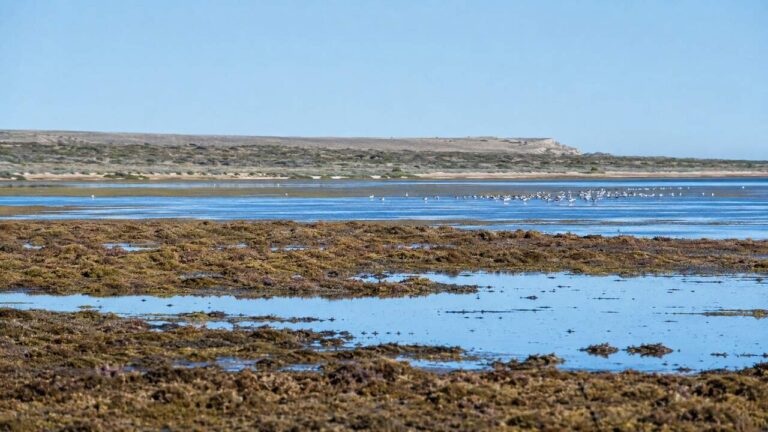
Península Valdés is famous for marine mammals, yet its coastal wetlands are equally important to the ecological story. Tidal flats, salt marshes, shallow shores and saline environments provide feeding and resting habitat for resident and migratory birds. The Ramsar designation recognizes wetlands of international importance; it is not a promise that every sector is open to visitors.
What “Ramsar” means
The Ramsar Convention is an international treaty for wetland conservation and wise use. A Ramsar site remains under national jurisdiction and is managed through local laws and protected-area rules. Designation highlights ecological value; it does not replace access restrictions, private property or wildlife closures.
One connected wetland system
Travelers often speak of “Ramsar sites” in the plural when referring to different wetland sectors. For planning, it is clearer to understand the Península Valdés wetland designation as a connected conservation framework containing varied habitats. Always consult the current official site map and local signage for precise boundaries.
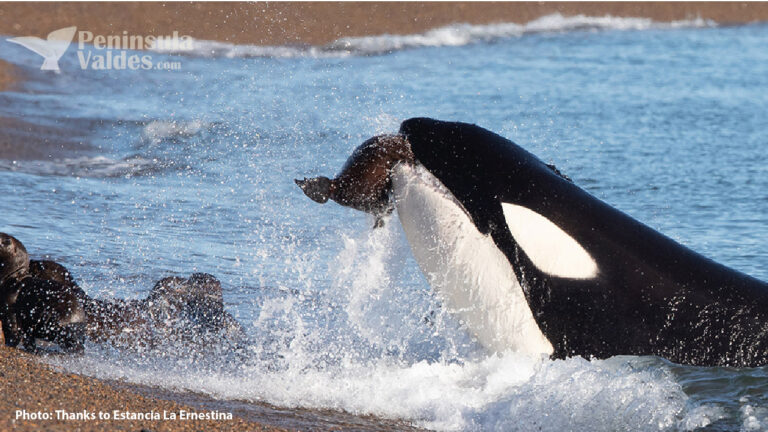
Orca Hunting in Peninsula Valdes: Estancia La Ernestina
Enjoy the amazing orca at the beaches of La Ernestina between March and May every year
| Habitat | Ecological role | Visitor expectation |
|---|---|---|
| Tidal flat | Invertebrate feeding ground | Best observed from shore at a distance |
| Salt marsh | Nursery, refuge and sediment capture | Avoid trampling channels and plants |
| Shallow bay | Shelter and feeding for waterbirds | Tides strongly change bird distribution |
| Saline depression | Specialized habitat and water-cycle record | Access only where authorized |
Why migratory shorebirds depend on these coasts
Long-distance migrants need places to rest and rebuild energy. Intertidal invertebrates provide food, while quiet roosts allow birds to conserve it. Repeated disturbance forces flocks to fly, reducing the value of a stopover even if the habitat still appears physically intact.
Where visitors can learn and observe
The Istmo Carlos Ameghino Visitor Center provides orientation to the peninsula’s habitats. Isla de los Pájaros has a managed shoreline viewpoint and fixed optics toward a protected breeding island; landing on the island is prohibited. Other wetlands may be remote, privately managed or seasonally restricted. Use designated viewpoints rather than searching for a route across exposed flats.
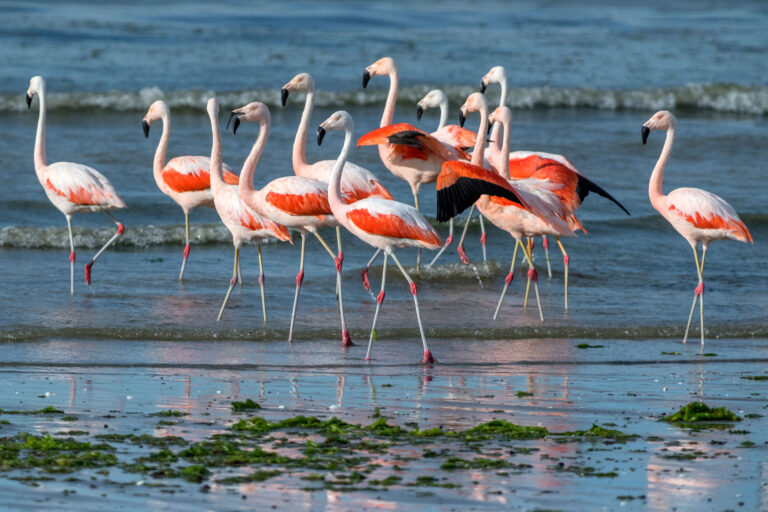
Birdwatching Whole Day Tour
Embark on a full-day birdwatching adventure in Patagonia, discovering the diverse avian species of the Peninsula Valdés region.
- Puerto Madryn
From Price: USD 1290
Timing and equipment
Bird distribution changes with tide, wind and season. Binoculars and a spotting scope are more useful than attempting to approach. Check official opening hours and road conditions, carry water and allow time for slow observation.
From a trip-planning perspective, wetlands should not be treated as a quick checklist stop. Their value becomes visible when travelers watch how tide and birds reorganize the same shoreline over time.
Wetland etiquette
- Stay outside roosting and nesting areas.
- Never use playback to draw birds closer.
- Keep groups quiet and compact.
- Do not walk onto mudflats to approach flocks.
- Take all waste away and avoid single-use plastics.
- Follow ranger instructions and temporary closures.
Birdwatching Whole Day Tour
Embark on a full-day birdwatching adventure in Patagonia, discovering the diverse avian species of the Peninsula Valdés region.
- Puerto Madryn
From Price: USD 1290