The best views depend on light and tide rather than physical proximity. Low tide exposes the vast intertidal zone, while dawn and late afternoon coincide with birds leaving or returning to their nests. The greatest concentration of individuals is generally observed from September through April. Bring binoculars if you have them and treat the island as a distant colony, not a place to enter.
| Condition | What it adds | Planning note |
|---|---|---|
| Low tide | Exposes the scale and texture of the intertidal flats | Best for geography and feeding shorebirds |
| Dawn | Birds leave the island to feed | Check that the visitor unit is open before arriving |
| Late afternoon | Birds return toward nesting areas | Leave enough daylight for the gravel return |
| September–April | Generally higher numbers and breeding activity | Species and counts still vary by day |
Visitor information and bird-season guidance were checked with the Península Valdés administration on August 28, 2026. The public unit is currently listed from 08:00 to 20:00, subject to temporary changes.
Classic Peninsula Valdes
Discover the natural wonders of Peninsula Valdés on this full-day adventure.
- Peninsula Valdes
From Price: USD 130
Where is Isla de los Pájaros?
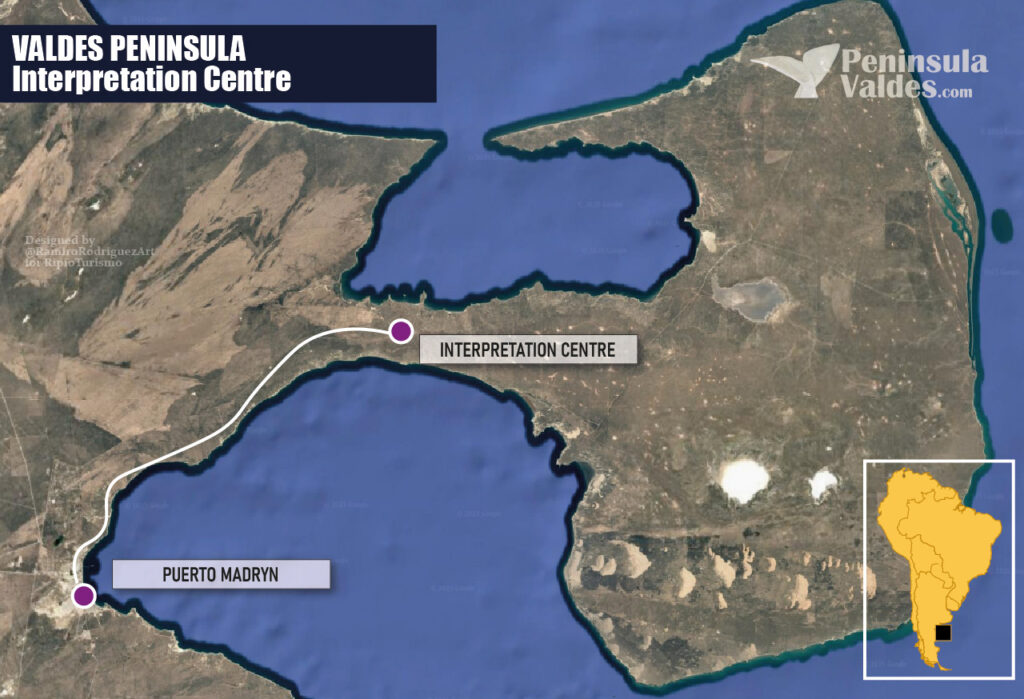
The island lies inside the sheltered Golfo San José, near the western entrance to Península Valdés. From the roundabout by the Istmo Carlos Ameghino Visitor Center, a signed gravel detour of about 5 kilometers leads toward the coastal ranger unit. The short approach makes it much easier to combine with the Istmo than the remote circuits to Punta Norte or Caleta Valdés.
Stop first at the visitor center if road, weather or hours are uncertain. Its exhibits also provide useful context about the peninsula’s marine mammals, birds, steppe and geology.
See the full Istmo Carlos Ameghino Visitor Center guide when planning the entrance portion of your day.
Puerto Madryn – 2 night traditional program
Check best season to see whales and penguins in the area
Can you visit the island itself?
No. Isla de los Pájaros has been an intangible protected zone since 1967 because of the diversity and number of migratory and breeding birds. It is approximately 800 meters from the coast and cannot be accessed by visitors. Low tide may make the intertidal connection appear walkable, but that visual impression is not permission.
Do not launch a kayak, walk onto exposed flats or arrange an informal boat approach. The no-access rule protects nests, feeding grounds and resting birds. The designated shore facilities were created specifically so the colony can be observed without entering it.
What can you see from the public area?
The interpretation center contains information panels and optics for observing the island and intertidal zone. A separate beach viewpoint opens a broad view across Golfo San José. Rangers can help identify current activity and explain why the shore looks different with each tide.
Because the island is distant, naked-eye viewing reveals movement and colony patterns rather than fine plumage. Binoculars or the on-site optics transform the experience. A spotting scope is valuable for dedicated birders, while photographers should bring a long lens and a stable support rather than expect frame-filling subjects.
Birds of Isla de los Pájaros
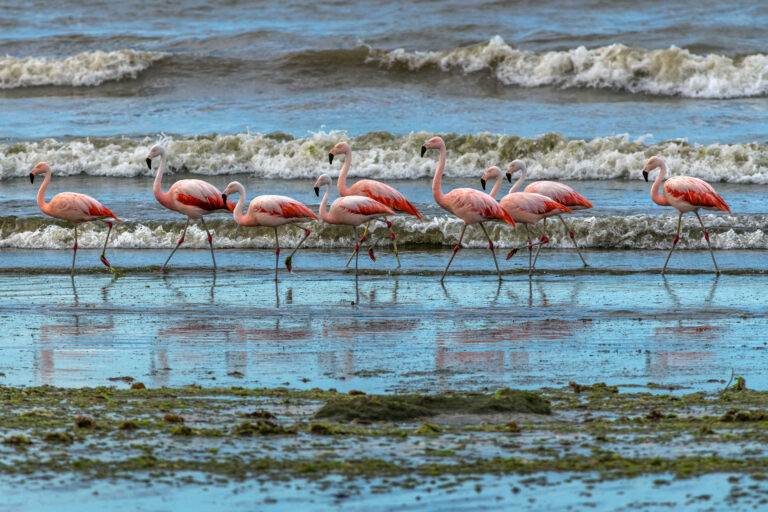
The official administration identifies the island as a breeding area for ten marine and coastal bird species. Representative birds include kelp gulls, rock cormorants, neotropic cormorants, oystercatchers, white and cocoi herons, flightless steamer ducks, crested ducks and Magellanic penguins. On the beach and intertidal flats, visitors may also see Chilean flamingos, terns and brown-hooded gulls depending on season.
Bird lists should remain flexible. Wind, water level, migration timing and food availability influence what is visible from shore. September through April generally brings greater numbers, but the site remains ecologically interesting outside the peak period because resident species and the changing gulf are always present.
For a broader destination calendar that includes marine mammals and penguins, consult when to see wildlife in Península Valdés.
Why the intertidal zone matters
At low tide, broad areas of mud and sand emerge between the coast and the island. These flats are not empty space. They hold food resources used by resident and migratory shorebirds, making the site valuable as a feeding and resting ground as well as a nesting colony.
The wider Península Valdés wetlands were designated a Ramsar Site and a Site of Regional Importance in the Western Hemisphere Shorebird Reserve Network in 2012. Those designations recognize the international importance of habitat that may look visually modest beside the destination’s whales and cliffs.
Best time of day and tide
The official recommendation highlights dawn, late afternoon and the intertidal period. At dawn, birds often leave the island in search of food; near sunset, many return toward nesting or resting areas. During a falling or low tide, feeding activity can increase across exposed flats.
There is a practical conflict: the operational unit is currently listed from 08:00 to 20:00, so sunrise or sunset may fall outside public hours depending on the season. Never enter a closed site to chase ideal light. Check the day’s opening time, sunset, tide and return-driving conditions together.
History of the protected area
Isla de los Pájaros was declared a protected, intangible area in 1967, making it one of the region’s early wildlife reserves. Its history is also connected to the strategic Gulf San José coastline and to stories that visitors encounter at the interpretation center.
The chapel near the viewpoint
A small chapel near the site was long described as a replica of the chapel at Fuerte San José, one of the Spanish settlements established on the gulf. More recent research cited by the protected-area administration found that interpretation to be inaccurate: historical records describe the fort’s chapel as an adobe structure with a thatched roof, while the existing building corresponds instead to a replica of a chapel from the citadel of Montevideo, Uruguay.
The Little Prince story
A popular local story suggests that the island’s silhouette may have inspired Antoine de Saint-Exupéry’s drawing of a boa constrictor digesting an elephant in The Little Prince. The resemblance is memorable, and Saint-Exupéry flew in Patagonia, but the connection should be presented as tradition rather than documented proof.
Facilities and accessibility
The public unit has ranger staff, an interpretation center, information panels, viewing optics and public restrooms. The main viewing experience is from prepared shore areas, but anyone with specific mobility requirements should confirm surfaces, distances and restroom access before travel.
There is no reason to bring food for a long stay, but water, wind protection and sun protection remain useful. Do not expect a restaurant, fuel station or full shop. Those needs are better handled in Puerto Madryn or Puerto Pirámides.
Photography and birdwatching tips
- Use binoculars first; photographs make more sense after identifying where birds are active.
- Bring the longest practical lens and stabilize it against wind.
- Use wider frames to show the island, gulf and exposed intertidal zone together.
- Avoid playback calls, drones or any method intended to alter bird behavior.
- Ask rangers which species are nesting or moving through the area that day.
Frequently asked questions
Can you walk to Isla de los Pájaros at low tide?
No. The island is an intangible protected zone and public access is prohibited even when intertidal flats are exposed.
Do you need binoculars?
They are strongly recommended. The interpretation center provides viewing optics, but personal binoculars give more flexibility.
How much time should you allow?
About 45–60 minutes is comfortable for the interpretation center, viewpoint and historical features. Birders may want longer. This is a planning estimate, not an official limit.
Are there public toilets?
Yes. The official visitor information lists public restrooms at the ranger unit.
Is it worth visiting outside September–April?
Yes for landscape, resident birds and interpretation, although the largest concentrations are generally seasonal.
Isla de los Pájaros works especially well as an opening or closing stop on a broader peninsula day. Compare it with the site’s overview of must-see places in Península Valdés, then choose the remote wildlife coast according to season.