The Patagonian mara is one of the most distinctive land mammals visitors can encounter in Península Valdés. It looks like a blend of a long-legged rabbit and a small deer, but it is actually a large rodent closely related to cavies. Maras live in open steppe and scrub, usually in bonded pairs, and are most often noticed from quiet roads or around open areas where low vegetation gives them a clear view.
They can be seen throughout the year, but no individual sighting is guaranteed. The best strategy is to travel slowly, scan well ahead and treat every encounter as wildlife observation rather than an opportunity to approach.
How to identify a Patagonian mara
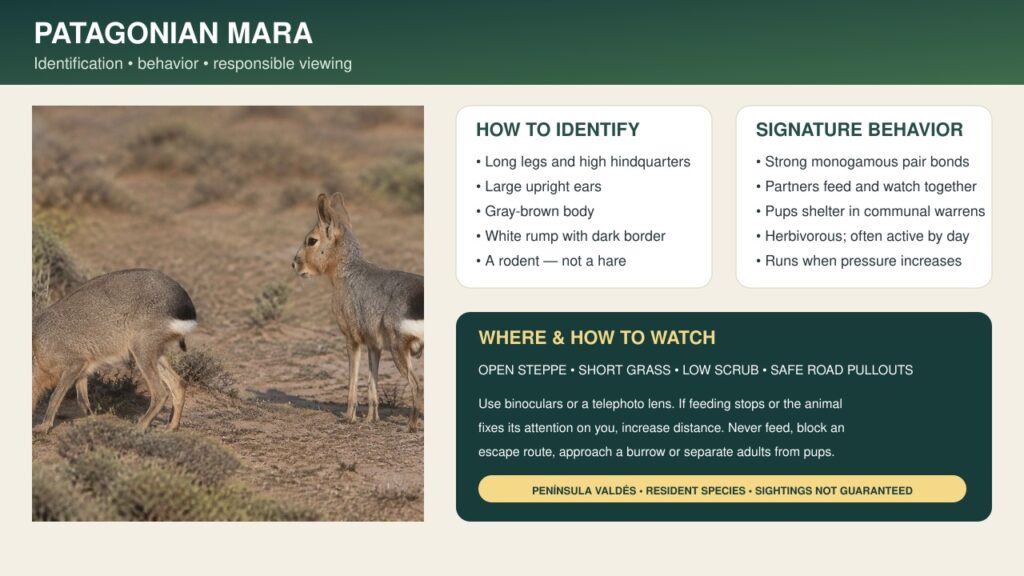
A mara’s long ears, high hindquarters and slim legs create its rabbit-like outline. The coat is gray-brown over the back, while the rump has a conspicuous white patch bordered by darker fur. Its face is blunt rather than hare-like, and its running style can shift from a quick four-footed gait to long, springing strides.
| Feature | What to look for |
|---|---|
| Body shape | Long legs, high rear body and compact torso |
| Ears | Large and upright |
| Rump | Bright white patch with a dark upper border |
| Usual setting | Open steppe, short grass and low scrub |
Why maras are rodents, not hares
The resemblance to a hare is a case of animals developing similar solutions for life in open country. Maras belong to the cavy family, the same broad South American lineage as guinea pigs and capybaras. Their long limbs help them cross exposed ground efficiently, while their eyes and ears help detect danger early.
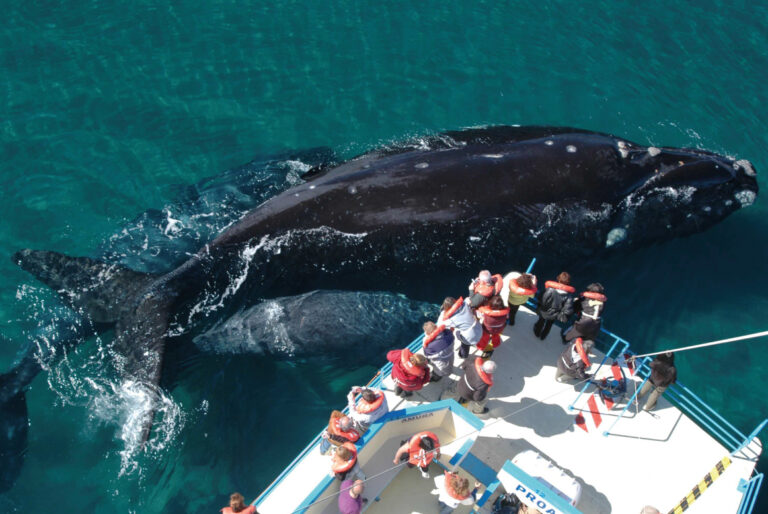
Discover Península Valdés – Low Cost Day Trip
A full-day budget tour from Puerto Madryn to Península Valdés with optional whale watching and scenic wildlife spots.
- Peninsula Valdes
From Price: USD 99
Pair bonds and social behavior
Patagonian maras are strongly monogamous. An adult male follows and guards his mate, and established pairs commonly remain together for long periods. When you see one mara feeding, scan nearby before assuming it is alone; its partner may be partly hidden behind a shrub.
Adult pairs generally forage in their own space, but breeding brings an unusual communal system. Several pairs may use the same nursery burrow, where pups shelter. Mothers visit to nurse their own young, while adults remain vigilant around the site. This combination of stable pairs and shared warrens is one of the species’ most remarkable behaviors.
Feeding, resting and vigilance
Maras are herbivores that eat grasses and other available plants. In open habitat, feeding and vigilance alternate: one animal may raise its head while the other continues grazing. They rest sitting upright or lying with their legs folded to one side, a posture that can look surprisingly dog-like.
Activity changes with temperature, disturbance and season. They are often described as daytime or crepuscular animals, so morning and late afternoon can be productive observation periods. Midday sightings remain possible, especially in cool conditions.
Where to look in Península Valdés
There is no single public “mara viewpoint.” Look across the open steppe while driving between the Istmo Carlos Ameghino, Puerto Pirámides, Caleta Valdés, Punta Norte and estancia sectors. Short vegetation, sandy ground and the edges of low scrub provide the clearest views. Quiet estancia grounds may also attract maras where habitat remains open and disturbance is low, but access rules always take priority.
Roadside observation is often the most realistic method. The passenger should scan while the driver concentrates on the road. Stop only in a safe, permitted place where the vehicle is fully clear of traffic; never brake abruptly for an animal.
For seasonal context on the peninsula’s better-known wildlife, use the site’s guide to which animals can be seen and when. Maras are resident land animals, so their visibility depends more on behavior and chance than on a short migration season.
How to distinguish a mara from other roadside animals
- European hare: more classically hare-shaped, with a shorter-looking body and no broad white rump panel framed in the same way.
- Guanaco: much larger, long-necked and unmistakably camelid.
- Southern mountain cavy or cuis: much smaller and closer to a compact wild guinea pig.
- Young livestock: found around managed properties and shaped very differently once the full body is visible.
Photography without changing the animal’s behavior
Use a telephoto lens or optical zoom and photograph from the vehicle or an established viewing area. A low visual angle can be attractive, but it is not a reason to crawl toward an animal or leave a permitted path. Watch for the white rump, paired behavior and the relationship between the mara and the low Patagonian vegetation.
If the mara stops feeding, fixes its attention on you or prepares to run, you are already affecting the encounter. Increase the distance. Never surround a pair, block its route to cover or position yourself between adults and a burrow.
The existing Península Valdés wildlife photography guide provides broader advice on light, lenses and respectful observation.
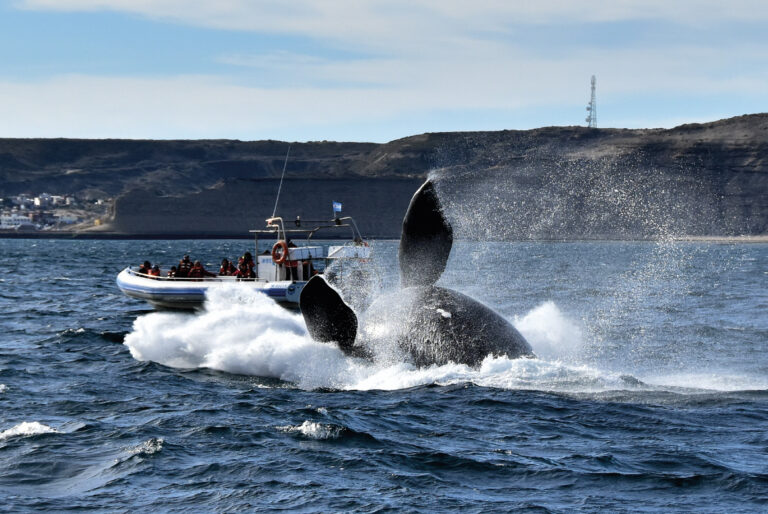
Classic Peninsula Valdes
Discover the natural wonders of Peninsula Valdés on this full-day adventure.
- Peninsula Valdes
From Price: USD 130
Responsible viewing rules
- Do not feed maras; feeding changes natural behavior and can draw them toward roads.
- Do not enter burrows or place cameras at burrow mouths.
- Keep dogs away from wildlife areas and follow protected-area regulations.
- Drive below posted limits and expect animals to cross.
- Leave no food scraps, even if they appear biodegradable.
In trip planning, land mammals are best treated as part of the complete Península Valdés experience rather than a guaranteed checklist. A knowledgeable guide improves detection because guides recognize habitat, posture and movement long before most visitors do.
A quiet emblem of the Patagonian steppe
Whales and penguins may define the destination internationally, but a pair of maras feeding in the steppe reveals a different Península Valdés: dry, spacious and shaped by animals adapted to constant exposure. Slow observation is the key. The less pressure you place on the animals, the longer and more natural the encounter is likely to be.
Classic Peninsula Valdes
Discover the natural wonders of Peninsula Valdés on this full-day adventure.
- Peninsula Valdes
From Price: USD 130
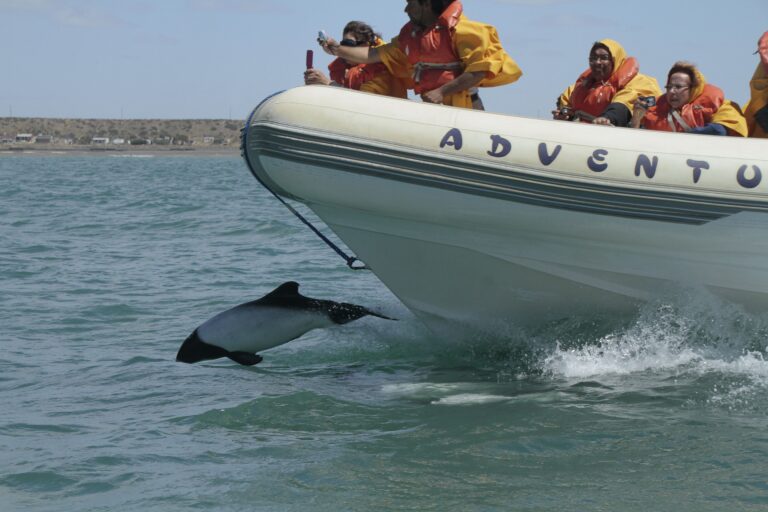
Commerson’s Dolphin Watching from Rawson Port
Enjoy a one-hour boat ride from Rawson to see Commerson’s dolphins, sea lions, and coastal birds in their natural habitat.
- Peninsula Valdes
From Price: USD 165