The history of northern coastal Chubut did not begin with Welsh settlement, ports or railways. Long before those developments, Indigenous peoples moved through, named and understood the steppe, river valleys and Atlantic shore. “Tehuelche” is often used as a broad label, but it can conceal important distinctions. The Gününa Küne—also written Günün a Küna in contemporary revitalization contexts—had their own identity and language, Gününa Yajüch, and should not simply be treated as another name for every Patagonian Indigenous group.
Who are the Gününa Küne?
Historical sources frequently called the Gününa Küne “Northern Tehuelche,” “Puelche” or “Pampa.” Those outside names changed across periods and observers. Community members and researchers today emphasize that broad colonial classifications do not necessarily match how people identified themselves.
Their historical territory was connected to northern and central Patagonia, including parts of present-day Río Negro and Chubut. Mobility was central to life on the steppe: routes linked water, seasonal resources, hunting grounds, exchange networks and gathering places. The coast was not an isolated edge but part of a wider landscape.
What does “Tehuelche” mean in this context?
For travelers, the safest approach is to understand “Tehuelche” as an umbrella term used in many museums, monuments and older publications, not as proof that all communities shared one language or identical customs. Aonikenk, Gününa Küne and other Patagonian peoples had related histories of movement and contact, but distinct names, territories and linguistic traditions.
This matters when interpreting attractions such as Puerto Madryn’s Monument to the Tehuelche Indian. The monument is part of the city’s twentieth-century public memory; it is not a complete account of Indigenous history.
Read it alongside the site’s guide to the monument and viewpoint, while remembering that a single statue cannot represent the diversity of Patagonian peoples.
Puerto Madryn – 4 night traditional program
Check best season to see whales and penguins in the area
Archaeology and the northern Chubut coast
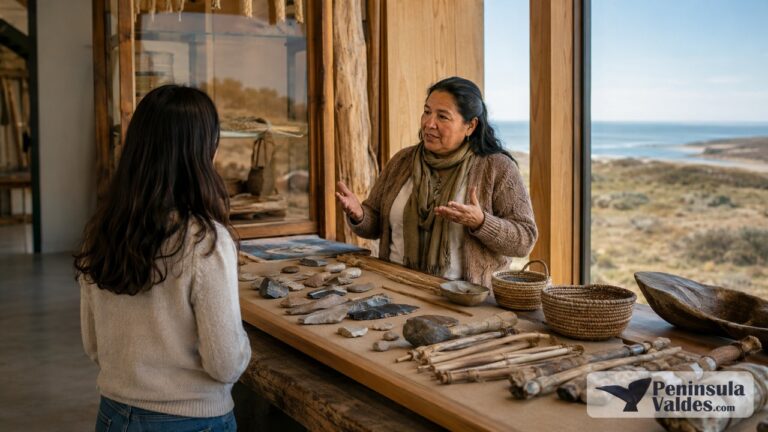
Archaeological evidence across Patagonia shows long-term human use of coastal and inland environments. Shell middens, stone tools, animal remains and hearths can reveal food choices, technology and movement, but archaeological objects do not automatically identify the name of a historical community. Researchers combine material evidence with linguistics, oral histories and written records, while recognizing that the evidence is incomplete.
Visitors should never remove flakes, shells, pottery fragments or bones. Their scientific value depends on location and context. If something appears significant, photograph it without moving it and report the location to the relevant reserve staff or heritage authority.
Language loss and revitalization
Gününa Yajüch suffered severe disruption through dispossession, state violence, discrimination and pressure to abandon Indigenous languages. Older references sometimes describe it as extinct. That wording ignores community-led work to recover vocabulary, establish practical writing systems and teach new generations. A more responsible description is that the language has been critically endangered and is the subject of revitalization efforts.
Gourmet Outdoors
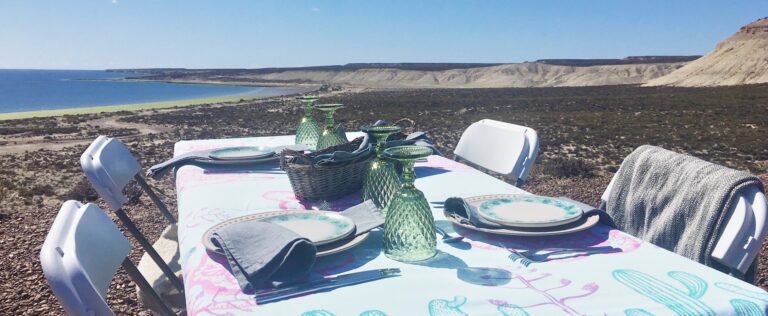
Savor the flavors of Patagonia with an outdoor gourmet adventure, cooking in the wild using the freshest seasonal ingredients.
- Puerto Madryn
From Price: USD 1290
How visitors can engage respectfully
- Use the name preferred by the community or speaker you are referencing.
- Avoid describing Indigenous peoples only in the past tense.
- Do not treat reconstructed “traditional” performances as representative without checking who created them.
- Choose museums and guides that identify sources and include Indigenous voices.
- Respect archaeological sites and never buy artifacts of uncertain origin.
In more than 25 years of planning travel in Argentina, I have seen that cultural interpretation is strongest when it admits complexity. A short, confident story may be easy to sell, but a careful story is more valuable to the traveler and more respectful to the people whose history is being discussed.
Connecting this history with a visit
Combine Puerto Madryn’s historical sites with the Lower Chubut Valley, where Indigenous, Welsh and later Argentine histories intersect.
The site’s guide to the Lower Chubut Valley provides useful geographic context. Ask museums which displays were produced with community participation and whether terminology has been updated.
A living heritage, not a preface
Gününa Küne and broader Tehuelche heritage should not be reduced to the chapter “before settlement.” Descendants, community organizations and language workers remain part of Patagonia’s present. Travelers who approach the northern Chubut coast with that understanding will see a more complete landscape—one shaped by memory, survival and continuing cultural work.
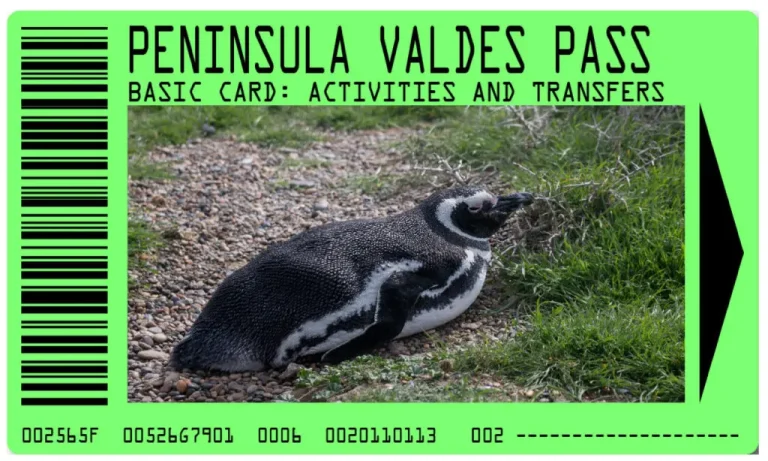
Peninsula Valdes Basic Pass
Immerse yourself in a mesmerizing world of whales, penguins, and marine wonders with our Peninsula Valdes Pass. Book now!
From Price: USD 390
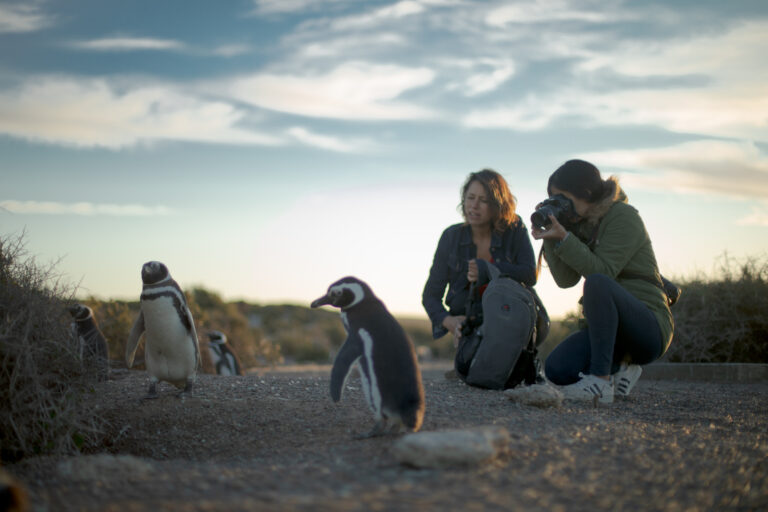
Adventure in Peninsula Valdés with Brunch
Enjoy a full-day adventure through Peninsula Valdés and its rich natural environments. Discover wildlife such as penguins, sea lions, and elephant seals.
- Peninsula Valdes
From Price: USD 249