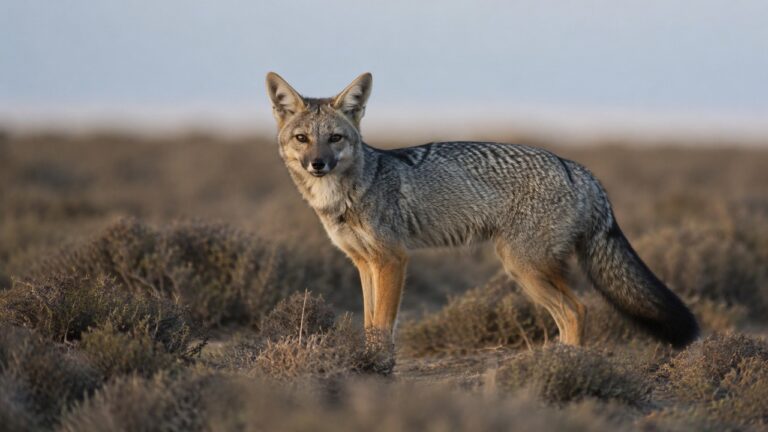
Two native South American canids are associated with Península Valdés: the smaller Patagonian gray fox and the larger culpeo, also called the red or Andean fox. They are not equally likely sightings. The gray fox is the characteristic fox visitors may encounter on the peninsula, while conservation assessments describe the culpeo as very rare there. A large reddish animal should therefore be identified carefully rather than automatically labeled a culpeo.
Both belong to the genus Lycalopex and are sometimes called “false foxes” because they are South American canids rather than members of the true-fox genus Vulpes. For travelers, size, build, color pattern and context provide the most useful field clues.
Gray fox vs culpeo: quick comparison
| Feature | Patagonian gray fox | Culpeo |
|---|---|---|
| Build | Small, light and fine-legged | Larger, taller and more robust |
| Color | Salt-and-pepper gray back; tawny legs; dark chin | Richer reddish head and legs; grizzled back |
| Tail | Bushy, often dark along the upper line | Very full, usually with a conspicuous dark tip |
| Expectation in Península Valdés | The regular fox species | Very rare; do not assume |
The Patagonian gray fox
The gray fox is a small, adaptable canid of steppe, scrub and other open habitats. Adults commonly weigh only a few kilograms. The grizzled back, reddish-tawny limbs, pale underparts and blackish chin are useful features. Its large ears and narrow muzzle reinforce the delicate profile.
Taxonomy can be confusing. Some current Argentine sources treat the Patagonian form traditionally called Lycalopex griseus within a broader Lycalopex gymnocercus concept. Travelers will still encounter “Patagonian gray fox,” “South American gray fox,” “chilla,” “zorro gris,” and both scientific names in references. This article uses Patagonian gray fox because it matches the visitor’s field-search language while acknowledging the taxonomic discussion.
Peninsula Valdes from La Elvira Lodge
Visit Península Valdés from a hotel built 20 years ago, which was restored and transformed into La Elvira Natural Lodge, located within the peninsula.
The culpeo
The culpeo, Lycalopex culpaeus, is South America’s second-largest native canid after the maned wolf. It looks more powerful than the gray fox, with a broader head, longer legs and pronounced reddish tones. Across its range it occupies mountains, steppe, shrublands and forest margins.
In Península Valdés, however, it is not the fox visitors should expect to see. The IUCN World Heritage conservation outlook specifically notes that culpeos are very rare on the peninsula. This is the central practical distinction: field guides may list both species regionally, but abundance and detectability are not equivalent.
Behavior and diet
Gray foxes are usually solitary and most active around dusk, night and early morning, although daytime sightings occur. Their opportunistic diet can include small mammals, birds, eggs, reptiles, insects, fruit and carrion. Culpeos also eat varied prey but, because of their larger size, can take larger mammals more readily.
A fox moving naturally often trots, pauses to listen, sniffs and changes direction. A fox waiting near vehicles or visitor facilities may have learned to associate people with food. That is not a better encounter; it is a warning sign that human behavior has already changed the animal’s routine.
Classic Peninsula Valdes
Discover the natural wonders of Peninsula Valdés on this full-day adventure.
- Peninsula Valdes
From Price: USD 130
Where fox sightings happen
Gray foxes can appear along quiet roads, in low scrub, near estancia landscapes and around the margins of visitor areas. Crepuscular light improves the chance of activity, but protected-area opening times and safe driving always take priority. Never remain on a road after dark solely to search for wildlife unless the route and rules explicitly allow it.
Scan ahead for ears, a low moving back or a bushy tail. If a fox crosses, stop safely and wait: a second animal or young may follow. Do not pull off onto vegetation or approach a den.
For a wider view of resident and seasonal fauna, read which animals can be seen in Península Valdés and when.
How to photograph a fox responsibly
Stay inside the vehicle when practical and use a telephoto lens. Increase shutter speed if the fox is trotting, and allow room in front of its direction of movement. A low sun can bring out fur texture, while open shade helps retain detail in both pale and dark markings.
Do not whistle, squeak, throw food or use recorded sounds to gain eye contact. If a fox comes toward the vehicle, keep windows controlled, secure food and let it pass. The photograph should document behavior, not manufacture it.
The site’s wildlife photography guide for Península Valdés covers general equipment and light considerations.
Peninsula Valdes from La Elvira Lodge
Visit Península Valdés from a hotel built 20 years ago, which was restored and transformed into La Elvira Natural Lodge, located within the peninsula.
Why feeding foxes is especially harmful
- It draws foxes toward roads and increases collision risk.
- It reduces natural wariness and can create aggressive begging.
- Human food is not an appropriate wild diet.
- Food concentration can increase disease transmission.
- A habituated fox may eventually be treated as a management problem.
I consider “do not feed wildlife” one of the most important instructions in a Península Valdés trip. A close fox created by food is not a privilege; it is a conservation failure that the next visitors inherit.
Identification under imperfect conditions
Distance, wind-blown fur, backlighting and age can all distort size and color. Use several features together. Ask: Is the animal lightly built or robust? Is the reddish color limited to legs and face or dominant across the animal? How thick is the tail? Most importantly, does the rarity of the proposed identification fit the evidence?
If photographs are available, keep the original sequence rather than only one heavily cropped frame. Multiple angles and a view of the surrounding habitat make later identification more reliable.
Realistic expectations produce better sightings
For most visitors, “fox in Península Valdés” means a possible Patagonian gray fox encounter. Culpeo belongs on the region’s biodiversity list, but it should be treated as exceptional on the peninsula. Knowing that difference prevents overclaiming and makes a genuine rare sighting more meaningful.
If terrestrial mammals are a major interest, request a private or specialist-led day through PeninsulaValdes.com and explain that the pace should prioritize quiet scanning and identification rather than only rapid transfers between marine-fauna stops.
Artisanal Fishery at The Gulf of San José
Step aboard a traditional fishing boat and discover the secrets of artisanal fishing passed down through generations in the heart of Peninsula Valdés.
- Puerto Madryn
From Price: USD 1290
Elephant Seals: Giants of the South
Witness the awe-inspiring presence of elephant seals on an unforgettable coastal adventure through Patagonia.
- Peninsula Valdes
From Price: USD 1190