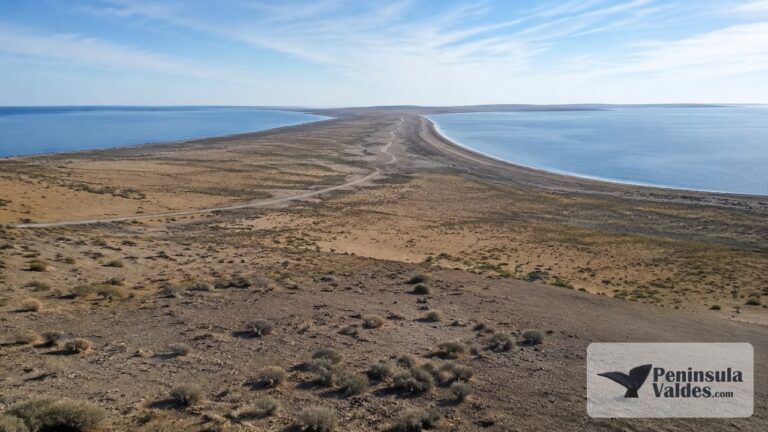
Istmo Carlos Ameghino is the narrow land bridge that connects Península Valdés to mainland Patagonia. Golfo San José lies to the north and Golfo Nuevo to the south, so this strip of steppe is the geographic reason Península Valdés is a peninsula rather than an island. Near its narrowest visible section, the land is about 6 kilometers (3.7 miles) across; UNESCO’s technical description gives the broader isthmus an average width of about 11 kilometers (6.8 miles).
For visitors, the Istmo is more than a road between the entrance gate and Puerto Pirámides. It is the best place to understand the map, compare the two gulfs and collect current information before driving into a protected area where distances are long and conditions can change.
Geographic measurements, visitor facilities and opening information were checked against the official Península Valdés administration and UNESCO material on August 28, 2026.
Classic Peninsula Valdes
Discover the natural wonders of Peninsula Valdés on this full-day adventure.
- Peninsula Valdes
From Price: USD 130
What exactly is an isthmus?
An isthmus is a relatively narrow piece of land joining two larger land areas, with water on both sides. Carlos Ameghino Isthmus connects the large promontory of Península Valdés with the South American mainland. It also separates two distinct marine settings: Golfo San José and Golfo Nuevo.
This narrow connection gives the peninsula an island-like quality. There is a single practical road corridor into the protected area, wildlife movements pass through a constrained terrestrial zone, and every visitor traveling by land crosses the same geographic threshold.
How wide is Istmo Carlos Ameghino?
The two figures most often encountered describe different things, so they are not contradictory:
- About 6 kilometers: the narrow strip visible from the official visitor-center area, as described by the Península Valdés administration.
- About 11 kilometers: the average width of the larger Ameghino Isthmus in UNESCO’s technical evaluation.
If you are writing a caption or explaining the viewpoint, “about 6 kilometers at the narrow section” is the clearest phrasing. If you are describing the complete landform, include the larger average as context.
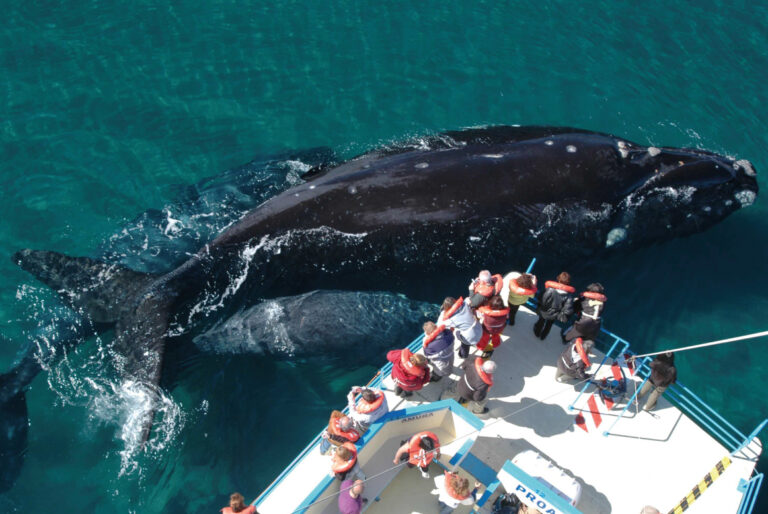
Discover Península Valdés – Low Cost Day Trip
A full-day budget tour from Puerto Madryn to Península Valdés with optional whale watching and scenic wildlife spots.
- Peninsula Valdes
From Price: USD 99
The two gulfs on either side
Golfo San José to the north
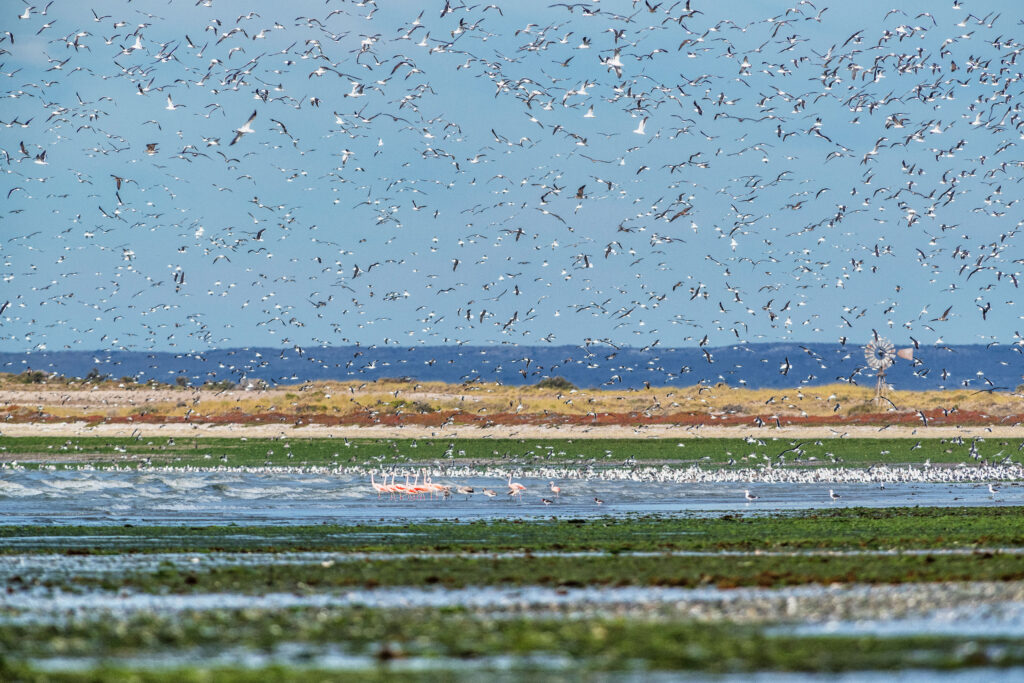
Golfo San José is the smaller and more enclosed of the two gulfs. Its coast includes extensive intertidal areas and important bird habitat. Large tidal changes can transform the exposed shoreline over a few hours. Isla de los Pájaros is reached from the Istmo side of this gulf by a separate gravel access road.
Golfo Nuevo to the south
Golfo Nuevo is larger and is bordered by Puerto Madryn on the mainland shore and Puerto Pirámides on the peninsula shore. Its protected waters are internationally important for southern right whales, especially during their breeding, calving and nursing season. The contrast between the urban western shore and the quieter peninsula coast helps explain why the gulf supports both tourism and a working maritime economy.
Understanding both gulfs together is more useful than treating the Istmo as an isolated photo stop. Golfo San José explains the northern intertidal and bird habitats; Golfo Nuevo explains Puerto Madryn, Puerto Pirámides and the peninsula’s sheltered whale waters.
How did this landscape form?
Península Valdés should not be reduced to a single simple origin story. The landscape is built from sedimentary formations and has been repeatedly reshaped by marine transgressions, changing sea level, wind, waves, erosion and deposition. Around the peninsula, those processes appear as marine terraces, cliffs, dunes, spits, shallow bays, salt depressions and pebble beaches.
The Istmo is the surviving connection between mainland and peninsula within that dynamic coastal system. Its low relief allows visitors to perceive both marine basins from elevated points, while the road crosses dry Patagonian steppe rather than a dramatic mountain pass.
The region’s exposed strata and fossil record are evidence of environments that changed over geological time. Fossils are protected heritage: observe them where interpretation is authorized, but never remove specimens or pieces of rock.
Why the Istmo matters for wildlife
The narrow land bridge sits between marine habitats used by whales, sea lions, birds, fish and invertebrates, while the steppe supports guanacos, rheas, maras, foxes and smaller species. The Istmo does not function as a conventional wildlife colony where animals appear on schedule. Its importance is ecological and connective.
Drivers should reduce speed whenever wildlife is near the road. Animals can cross unexpectedly, and stopping in the traffic lane creates a second hazard. Use established pullouts and keep a respectful distance.
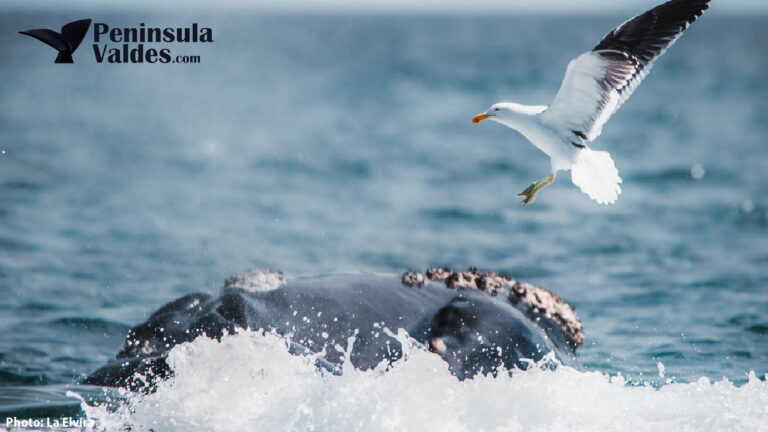
Peninsula Valdes from La Elvira Lodge
Visit Península Valdés from a hotel built 20 years ago, which was restored and transformed into La Elvira Natural Lodge, located within the peninsula.
Visiting the Istmo Carlos Ameghino Visitor Center
The Centro de Visitantes Istmo Carlos Ameghino is approximately 22 kilometers (14 miles) beyond the Península Valdés entrance checkpoint on Provincial Route 2. It reopened with a renewed interpretive route in December 2025 and is the most useful first stop for maps, current road information, tides, wildlife reports and ranger advice.
Inside, self-guided rooms cover historical geology, marine fauna, coastal and terrestrial ecosystems, human history and children’s interpretation. A complete southern right whale skeleton is one of the central exhibits. Outside, visitors can use an observation tower and a short adapted steppe trail of roughly 15 minutes.
Facilities and accessibility
- Tourist information staff.
- Accessible public restrooms.
- A shop selling regional items, snacks, drinks and basic travel supplies.
- An observation tower with broad views toward both gulfs when visibility is good.
- An adapted interpretive trail through the Patagonian steppe.
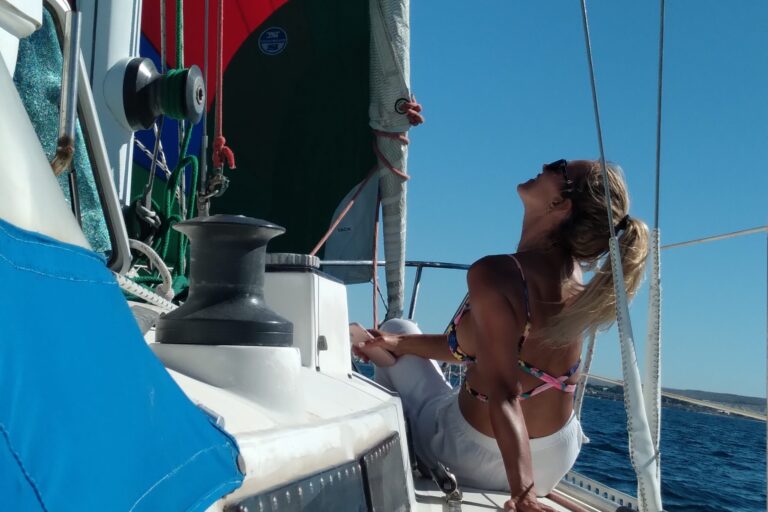
Half-Day Coastal Sailing Tour in Puerto Madryn
Sail along the coast of Puerto Madryn and connect with the city's nautical heritage on a relaxing and interactive sailing trip. Enjoy breathtaking views, local stories, a
- Puerto Madryn
From Price: USD 140
Current opening hours
The official administration lists daily opening from 8:00 a.m. to 8:00 p.m. During April, May and June it advertises a reduced schedule of 9:00 a.m. to 5:00 p.m. Hours can change for maintenance, holidays or weather, so check the official visitor-center page or contact the center before relying on a late arrival.
Can you really see both gulfs?
Yes, the elevated visitor-center area is designed to help you read both sides of the isthmus. Whether the waterlines appear clearly depends on haze, cloud, light and windblown dust. The view is geographic rather than close-up: binoculars help, but the purpose is to understand the shape of the land, not to watch nearby marine mammals.
Morning light often improves visibility and leaves more time to ask staff about the day’s route. Strong midday glare can flatten the landscape, while a clear late afternoon can give excellent color but may not suit travelers who still have a long gravel drive ahead.
How to include the Istmo in your itinerary
Stop on the way in, not only on the return. The staff can tell you which visitor units are open, where fauna has recently been active and whether rain, mud, dust or maintenance affects internal roads. That information can change the sensible order of your day.
Allow 30 to 45 minutes for a focused visit, or around an hour if you want to read the exhibits, see the whale skeleton, use the tower and walk the short trail. Families and travelers interested in geology may want longer.
After the center, common choices include Puerto Pirámides, Isla de los Pájaros, Punta Norte or Caleta Valdés. Do not try to combine every distant unit simply because they appear close on a small map.
Review the site’s guide to road conditions inside Península Valdés before a self-drive day. Most internal roads beyond the paved corridor are gravel and can change quickly after rain or in high wind.
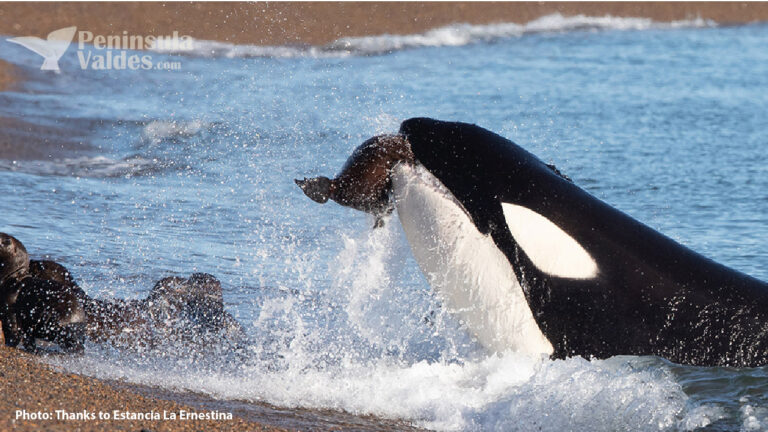
Orca Hunting in Peninsula Valdes: Estancia La Ernestina
Enjoy the amazing orca at the beaches of La Ernestina between March and May every year
Frequently asked questions
Is there an extra fee for the visitor center?
The center is inside the Península Valdés protected area. The protected-area entrance fee is paid at the access checkpoint; check current official conditions for any included services or exemptions.
Is the Istmo road paved?
Provincial Route 2 through the entrance, visitor-center corridor and onward toward Puerto Pirámides is paved. Many roads to remote visitor units are not.
Can I stop anywhere for photos?
No. Use designated pullouts and visitor areas. Road shoulders can be soft, and unplanned stops disturb wildlife and create traffic risks.
Is the visitor center wheelchair accessible?
The official center lists accessible restrooms and an adapted outdoor trail. Individual access to every exhibit or tower level should be confirmed directly if it is essential to your visit.
Why is it named Carlos Ameghino?
The isthmus honors Carlos Ameghino, an Argentine naturalist and explorer associated with Patagonia’s scientific history.
Puerto Madryn & Puerto Piramides – 4 nights
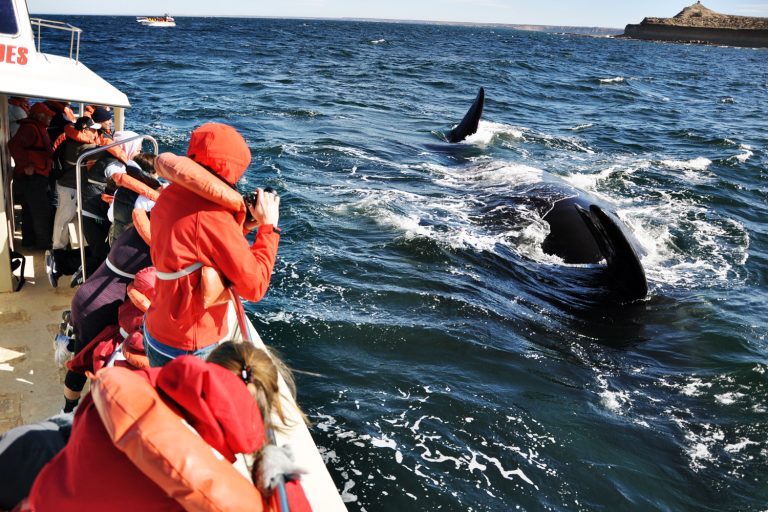
Check best season to see whales and penguins in the area
Puerto Madryn & Ushuaia
Check best season to see whales and penguins in Puerto Madryn and Peninsula Valdes area