Before wildlife tourism became the international image of Península Valdés, sheep ranching shaped much of its working landscape. Estancias divided and managed the steppe, wells and wind pumps supplied scarce water, shearing sheds organized seasonal labor, and wool connected this remote peninsula with export markets. Ranching remains part of the region, now operating beside conservation and tourism.
Why sheep ranching expanded in Patagonia
The open Patagonian steppe was incorporated into large pastoral properties from the late nineteenth century onward. Low rainfall and sparse vegetation limited crop farming, while sheep could graze across extensive areas. Merino breeds became especially important because their fine wool had commercial value.
Península Valdés was never an empty production zone. Its transformation into ranch land took place within a much older Indigenous landscape and later altered water access, movement, vegetation and wildlife relationships. A complete history needs to acknowledge both economic development and dispossession.
The annual rhythm of an estancia
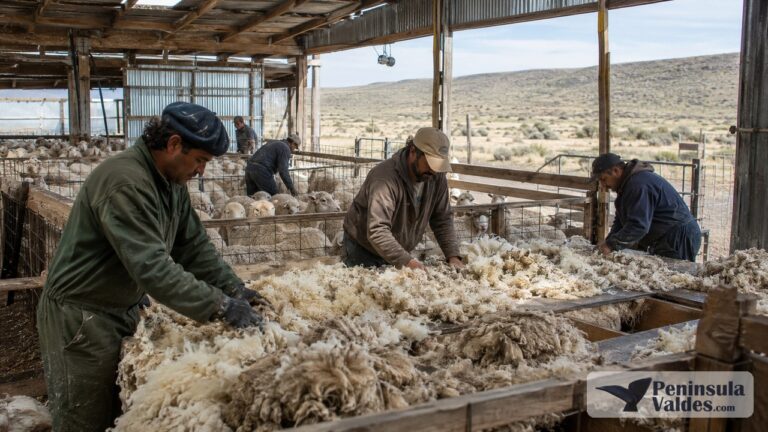
Sheep work follows seasons and weather. Lambing, flock movements, health checks and shearing create periods of concentrated activity. Shearing requires skilled labor: the fleece is removed, sorted and classified before baling and transport. Timing varies by property and year, so visitors should never assume that a demonstration or working shearing day will be available on a particular date.
Wool as a regional export
Wool linked isolated ranches to Puerto Madryn and other Patagonian ports. Carts and later railways and trucks moved bales from inland properties toward warehouses and ships. The product was valuable because it could travel long distances without refrigeration, making it suited to Patagonia’s geography.
The old Central Chubut Railway also carried wool and agricultural goods between the interior and the coast. This wider transport history helps explain why port infrastructure mattered to ranching even when the sheep grazed far from town.
Peninsula Valdes from La Elvira Lodge
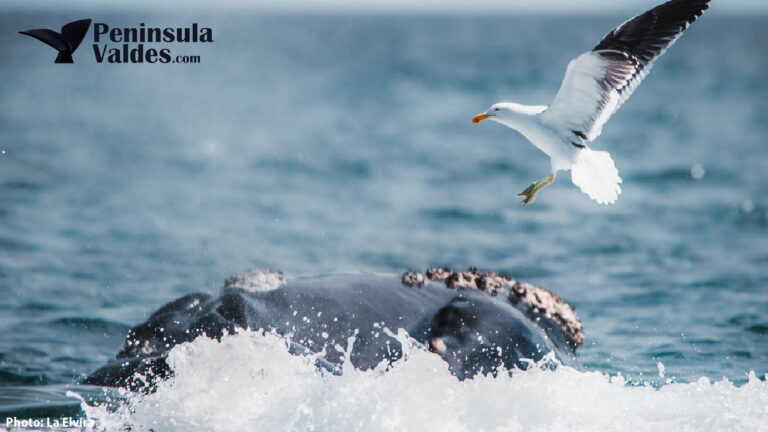
Visit Península Valdés from a hotel built 20 years ago, which was restored and transformed into La Elvira Natural Lodge, located within the peninsula.
Estancias travelers can understand today
Some properties combine livestock traditions with lodging, wildlife viewing and conservation.
The site’s guide to estancias in Península Valdés describes several examples.
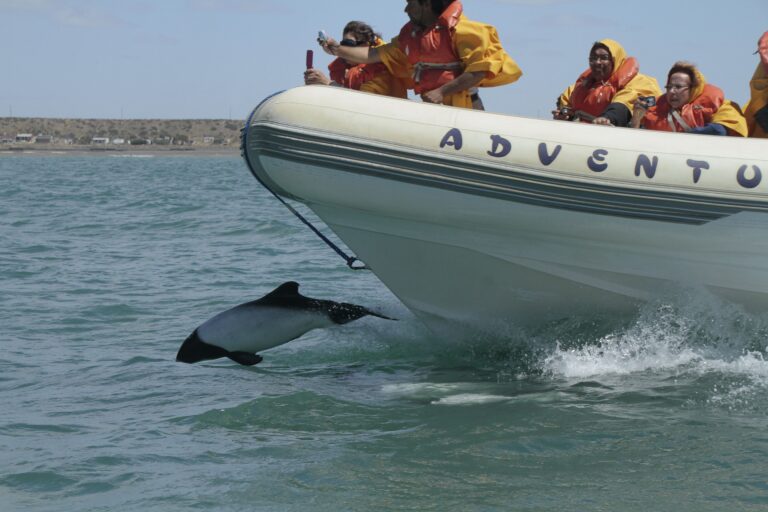
Commerson’s Dolphin Watching from Rawson Port
Enjoy a one-hour boat ride from Rawson to see Commerson’s dolphins, sea lions, and coastal birds in their natural habitat.
- Peninsula Valdes
From Price: USD 165
Estancia San Lorenzo
San Lorenzo is associated with Australian Merino wool production as well as a major Magellanic penguin colony. Ranch activities may include shearing and sheepdog work at specific times, while wildlife tourism has become a central visitor experience.
El Principio and other small-scale stays
Properties such as El Principio interpret the steppe, rural work and local food in a more intimate setting. Each estancia differs in access, production and tourism services; visitors should verify what is genuinely operating rather than expecting a standardized “ranch show.”
Ranching, wildlife and conservation
The relationship is complex. Fences, water points, grazing pressure and predator management can affect ecosystems. At the same time, private ranches hold large areas of habitat and some now participate in research, coastal cleanup, responsible grazing and wildlife protection. Tourism can provide income that rewards conservation, but it does not automatically remove the environmental impacts of livestock.
Península Valdés’s UNESCO status recognizes exceptional marine-mammal habitat, while the protected area also includes working properties. This makes the peninsula a managed cultural landscape as well as a wildlife destination.
What to look for on a ranch visit
- Original shearing sheds, corrals and wool presses.
- Wind pumps, tanks and wells that made permanent ranching possible.
- How fleeces are sorted and why Merino fineness matters.
- Current grazing and conservation practices.
- The role of seasonal workers and the distance to ports and services.
In my experience, a good estancia visit avoids staging every detail for tourists. The most meaningful interpretation connects ordinary work—water, fences, weather and maintenance—with the larger story of wool, settlement and conservation.
A deeper way to see the steppe
Wildlife may be the reason most travelers arrive, but sheep ranching explains many of the roads, buildings and property boundaries they cross. Ask guides about the working landscape, not only the animals. Península Valdés becomes more understandable when its natural and rural histories are read together.
Puerto Madryn & Ushuaia
Check best season to see whales and penguins in Puerto Madryn and Peninsula Valdes area
Puerto Madryn, Puerto Pirámides and Bahia Bustamante – 6 nights
Check best season to see whales and penguins in the area