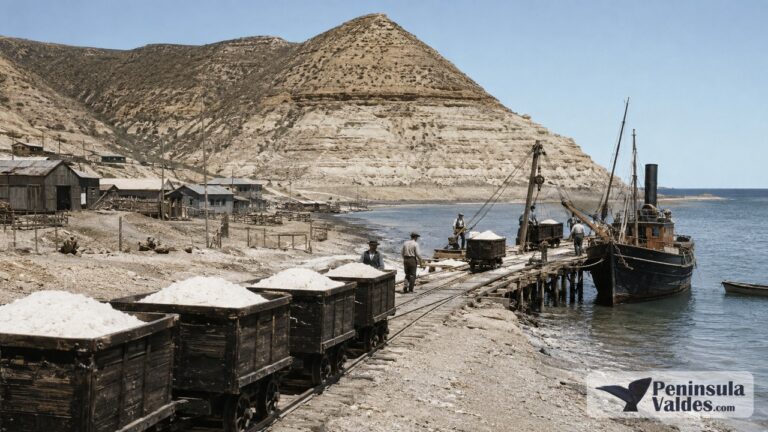
Puerto Pirámides began as an industrial port for salt extracted from the interior of Península Valdés. A narrow-gauge railway carried salt from Salina Grande to the sheltered bay, where it was loaded for shipment. When the salt economy declined, the settlement survived through ranching, services and, eventually, a new relationship with the sea: whale watching.
Why a port was built here
The bay at Puerto Pirámides is protected by high, pyramid-shaped cliffs and sheltered within Golfo Nuevo. Its geography offered calmer loading conditions than the exposed Atlantic coast. Commercial exploitation of the peninsula’s salt flats expanded around the end of the nineteenth century, and the port settlement was formally established around 1900.
The name refers to the triangular forms seen in the surrounding cliffs, not to ancient buildings. The landscape gave both the port and later the village their identity.
The salt railway across Península Valdés
A narrow-gauge railway of roughly 34 kilometers connected Puerto Pirámides with Salina Grande. Workers extracted, processed and transported salt across the dry interior. According to the municipality, Salina Grande lies 42 meters below sea level and Salina Chica 35 meters below; extraction once reached approximately 12,000 tons per year before operations closed in 1920.
To understand the source landscape, see the site’s guide to Salina Grande and Salina Chica. Access is not the same as visiting an ordinary roadside attraction, so current routes and permissions should always be confirmed.
Peninsula Valdes from La Elvira Lodge
Visit Península Valdés from a hotel built 20 years ago, which was restored and transformed into La Elvira Natural Lodge, located within the peninsula.
Life in the salt-port settlement
The industrial period brought laborers, railway staff, sailors, merchants and families. Workshops, storage areas and simple housing supported the operation. Water scarcity, isolation and wind shaped daily life. The settlement depended on supply routes and the seasonal rhythm of work.
World War I disrupted trade and the salt business weakened. The railway and extraction system eventually ceased operating, leaving traces rather than a fully preserved industrial complex.
From extraction to conservation and tourism
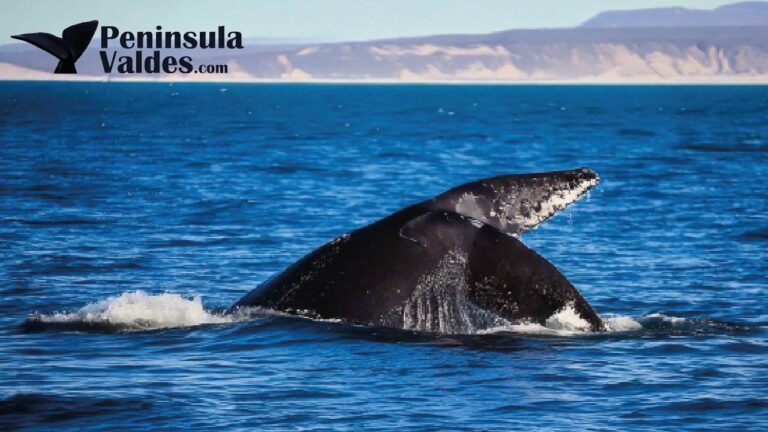
During the twentieth century, Puerto Pirámides remained small. The major transformation came when visitors and local operators recognized the exceptional presence of southern right whales in Golfo Nuevo. Organized whale-watching excursions developed from the 1970s onward, and conservation rules gradually became central to the village’s economy.
Today Puerto Pirámides is the only town within the Península Valdés protected area and the principal departure point for whale-watching boats. The same sheltered bay once chosen for loading salt now supports an activity based on observing living marine ecosystems.
What remains for visitors to interpret?
- The shape of the bay and cliffs that made the port practical.
- Historical information and local stories about the salt railway.
- Traces of industrial infrastructure, which should not be removed or disturbed.
- The relationship between the inland salt flats and the coast.
- The modern maritime culture created by guides, boat crews and conservation work.
For current attractions and the historical salt-flat context, consult the official Puerto Pirámides attractions page. Operating conditions, site access and guided options can change.
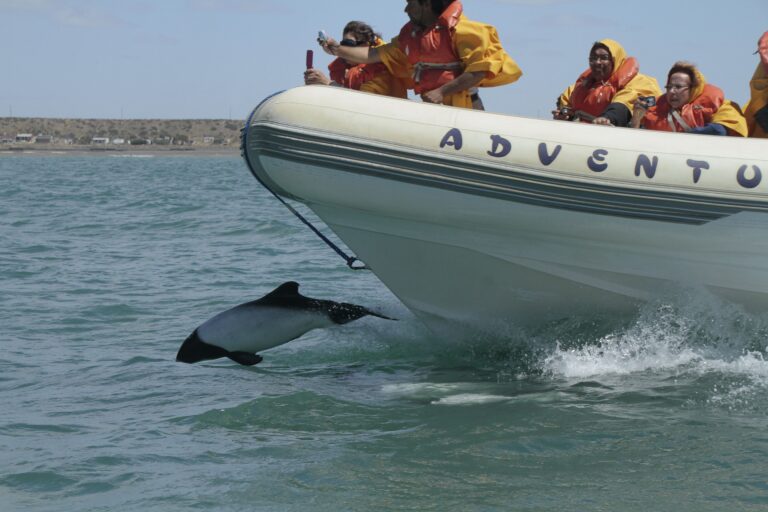
Commerson’s Dolphin Watching from Rawson Port
Enjoy a one-hour boat ride from Rawson to see Commerson’s dolphins, sea lions, and coastal birds in their natural habitat.
- Peninsula Valdes
From Price: USD 165
How to experience both histories
Spend time walking through the village before or after the navigation. Look inland toward the route once used by the railway and seaward toward the protected gulf. A guide with local historical knowledge can explain details that are difficult to identify in the present landscape.
When planning visits, I encourage travelers not to treat Puerto Pirámides merely as a pier. The village tells a rare story of economic reinvention: salt, transport, maritime labor, conservation and whale watching all occupy the same small bay.
The bay that changed purpose
Puerto Pirámides did not move when its economy changed. Instead, the meaning of its location changed—from a convenient port for extracting a mineral resource to a gateway for observing and protecting marine life. That contrast makes it one of Península Valdés’s most revealing cultural landscapes.
Puerto Madryn & Puerto Piramides – 3 nights
Check best season to see whales and penguins in the area